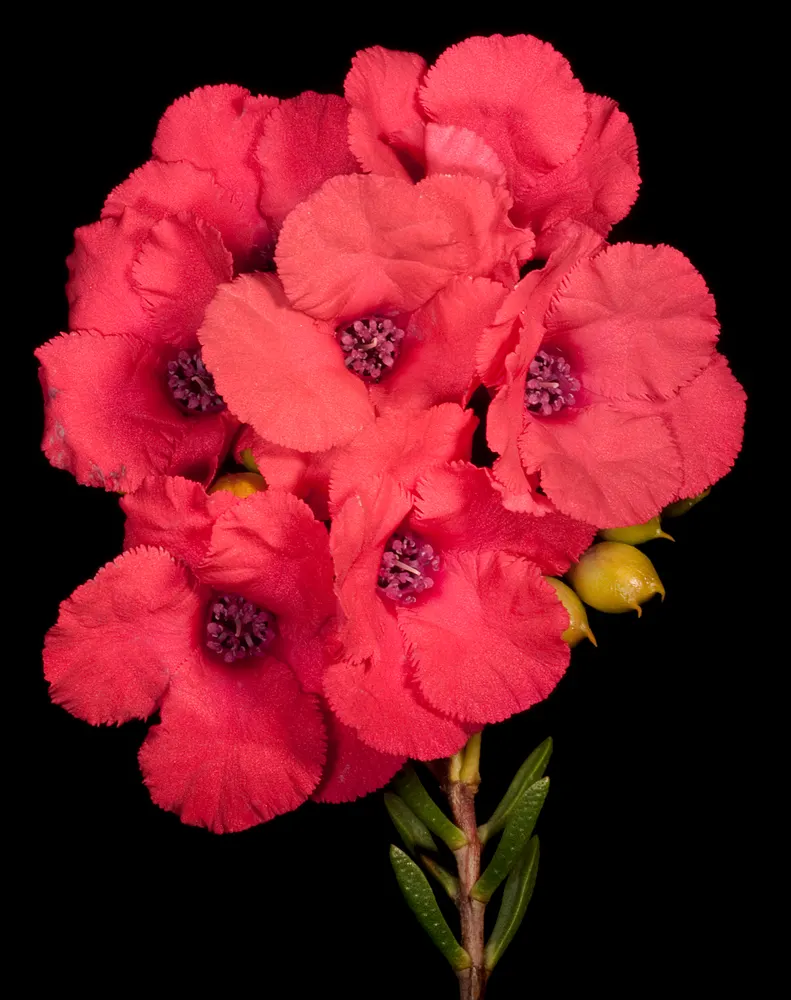
Photo: Kevin Thiele from Perth, Australia, CC BY 2.0 (via Wikimedia Commons)
Thread-Leaf Copper Cups
Pileanthus filifolius
Also known as Copper Cups, Fine-Leaved Pileanthus
Key benefits
✦Traditional uses
✦Pileanthus filifolius is a little-known jewel of the Western Australian bush, part of a small and beloved genus in the myrtle family that locals and wildflower hunters simply call copper cups, for the way the buds sit like tiny burnished thimbles along the stems before bursting open. It has no recorded history as a food or medicine plant, its value instead lived out in the sandplains and heathlands where it grows, where it has long fed native bees and nectar-seeking insects during the cooler months. In more recent decades it has found a second life among native plant collectors and cut-flower growers, who prize it for the same starry, copper-and-cream blooms that once simply dotted the wild kwongan scrub of the southwest. Its story is less about the kitchen or the medicine chest and more about a quiet corner of Australian flora that rewards anyone willing to look closely.
How to grow & use it
✦The full apothecary for Thread-Leaf Copper Cups
Traditional remedies and step-by-step preparations, a complete growing guide, and how to harvest, dry, and store it, all unlocked with HerbLens Unlimited.
- ✦Remedies & preparations
- ✦ Growing guide
- ✦Harvest & storage
From under $6 a month. Free plant identifications always included.
- ✦Geraldton wax (Chamelaucium uncinatum)
- ✦Featherflower (Verticordia species)
- ✦Kunzea
- ✦Geraldton wax
- ✦Chamelaucium species
“For a touch of wild copper and cream in the driest, sunniest corner of the garden, where little else will bloom.”
The genus name Pileanthus comes from the Greek words for felt cap and flower, a nod to the little cap-like calyx that covers each bud like a hood and is shed as the copper-colored petals unfurl.
This wildflower is grown for its blooms, not eaten or brewed, and some people find the sap or foliage mildly irritating to the skin.