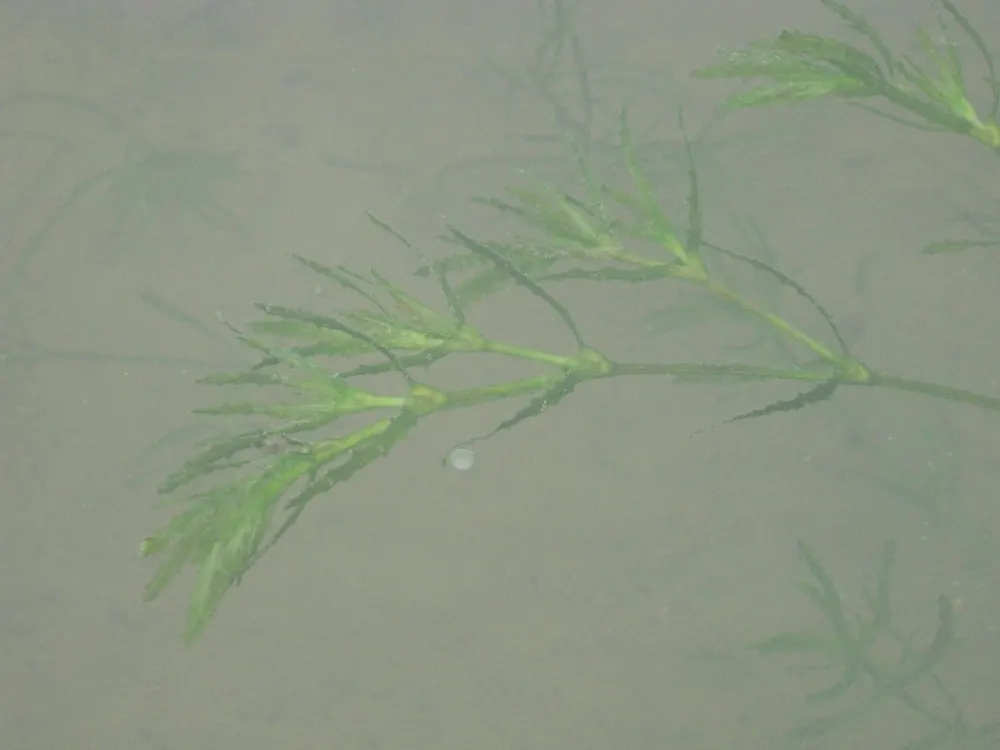
Photo: Ruppia2000, CC BY-SA 3.0 (via Wikimedia Commons)
Spiny Naiad
Najas marina
Also known as Holly-leaved Naiad, Large-leaved Naiad, Sea Naiad
Traditional uses
✦Najas marina has never held a place in the human apothecary, but it has long held one in the life of a lake. Old-time duck hunters and pond keepers came to know it as a sign of good water, a tangle of dark, spiny-leaved stems that meant the bottom was clean and the fish had somewhere to hide. Waterfowl have grazed its foliage and seeds for as long as anyone kept records, and generations of naturalists learned to read a healthy wetland partly by whether spiny naiad was thriving in it. Its value was always the quiet, ecological kind, a plant tended not by hand but by good water.
How to grow & use it
✦The full apothecary for Spiny Naiad
Traditional remedies and step-by-step preparations, a complete growing guide, and how to harvest, dry, and store it, all unlocked with HerbLens Unlimited.
- ✦Remedies & preparations
- ✦ Growing guide
- ✦Harvest & storage
From under $6 a month. Free plant identifications always included.
- ✦Hornwort
- ✦Elodea (waterweed)
- ✦Duckweed
- ✦Hornwort (Ceratophyllum demersum)
- ✦Elodea (Elodea canadensis)
“For the quiet, underwater garden that keeps a whole pond honest.”
Because its seeds are so distinctively patterned and nearly indestructible, spiny naiad shows up again and again in lakebed sediment cores, and paleoecologists use those ancient seeds to reconstruct what a lake's water chemistry looked like thousands of years ago.
Spiny naiad is not eaten and has no history of medicinal use; it is not known to be toxic.