Photo: CC BY-SA 3.0 (via Wikimedia Commons)
Yopo
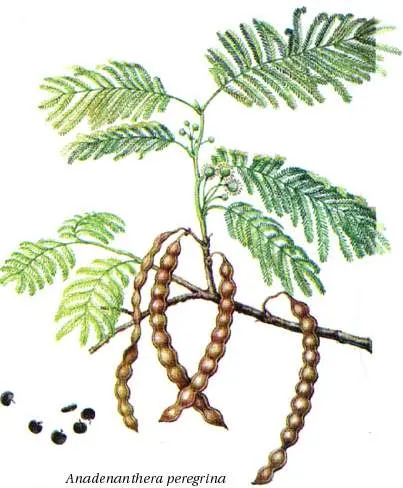
Anadenanthera peregrina
Also known as Cohoba, Cebil (related species), Jopo, Parica snuff tree, Angico
Traditional uses
✦Anadenanthera peregrina has a long and storied place in the ceremonial life of Indigenous peoples across the Orinoco basin and parts of the Caribbean, where its roasted, powdered seeds were traditionally prepared as a snuff called yopo or cohoba and used by shamans in ritual and divinatory contexts. Spanish chroniclers recorded its use among Taino communities in the Caribbean as early as the late fifteenth century, and archaeological snuff trays found in the Andes suggest the practice reaches back thousands of years. This tree's cultural importance is real and deep, but it belongs to the realm of ceremony and anthropology, not to home herbalism or self-directed wellness use.
How to grow & use it
✦The full apothecary for Yopo
Traditional remedies and step-by-step preparations, a complete growing guide, and how to harvest, dry, and store it, all unlocked with HerbLens Unlimited.
- ✦Remedies & preparations
- ✦ Growing guide
- ✦Harvest & storage
From under $6 a month. Free plant identifications always included.
“An entry for the record, not the remedy cabinet, a tree whose seeds carry a history far too potent for a home apothecary.”
Archaeologists have found snuff trays and bone tubes used for inhaling Anadenanthera seed powder at sites in the Andes dating back roughly 4,000 years, making it one of the oldest documented psychoactive traditions in the Americas.
Anadenanthera peregrina seeds contain potent psychoactive tryptamines, including bufotenine and related compounds, and traditional preparations were administered as a snuff insufflated directly into the nasal passages, a method that produces rapid, intense, and unpredictable effects on the mind and body. This is not a plant for home use, tea, tincture, or any oral or nasal self-preparation: it can cause severe physiological effects including altered heart rate and blood pressure, intense sensory and psychological disturbance, and dangerous interactions with many medications, including MAOIs, SSRIs, and other psychiatric drugs. Its seeds and preparations are controlled or restricted in a number of countries due to their psychoactive constituents. This entry is included for botanical and historical reference only; there is no safe home dose, and anyone encountering this plant should leave its use to documented ceremonial and research contexts under qualified, legally sanctioned guidance, never to self-experimentation.