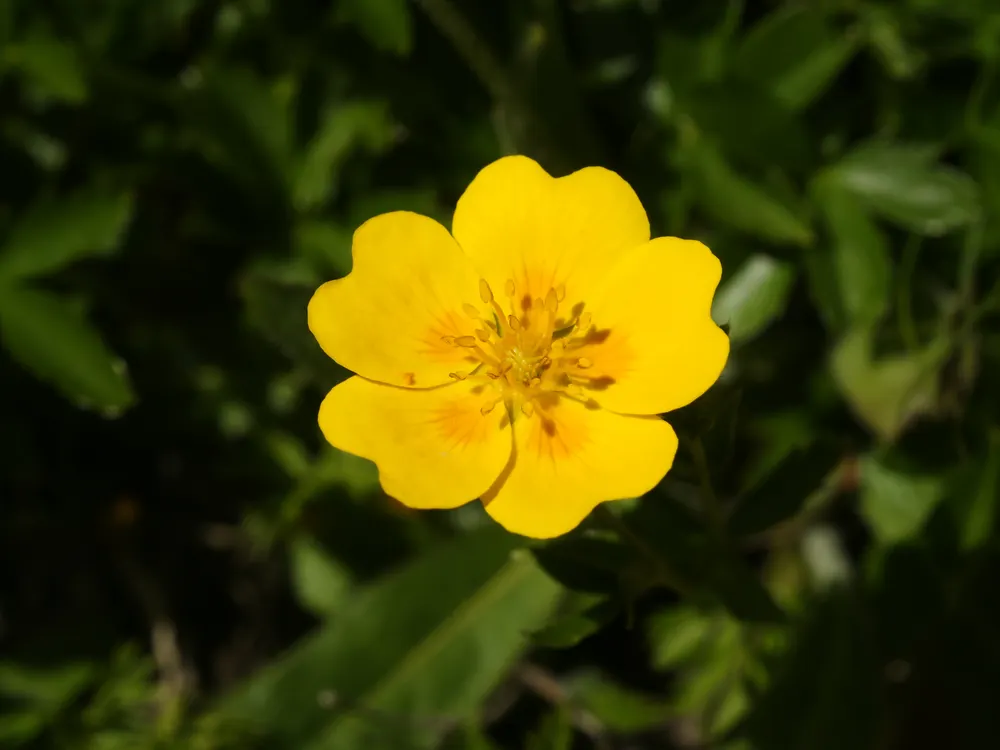
Photo: Hans Hillewaert, CC BY-SA 3.0 (via Wikimedia Commons)
Golden Cinquefoil
Potentilla aurea
Also known as Alpine Cinquefoil, Golden Potentilla, Mountain Cinquefoil
Key benefits
✦Traditional uses
✦In the high pastures of the Alps and Carpathians, golden cinquefoil carpeted the same slopes where shepherds grazed their flocks each summer, and its bright five-petaled blooms became a familiar, almost cheerful landmark of the growing season. Like its better-known cousin tormentil, it belongs to a genus long valued in European folk herbalism for a gentle, tannin-rich astringency, and mountain households sometimes steeped the leaves into a simple tea to settle the stomach or ease a scratchy throat after a long day outdoors. It was never as central to the herbal medicine chest as tormentil, but it traveled in the same tradition, gathered more casually and used more sparingly. Today it is treasured at least as much for its beauty in rock gardens as for any remedy tucked into its leaves.
How to grow & use it
✦The full apothecary for Golden Cinquefoil
Traditional remedies and step-by-step preparations, a complete growing guide, and how to harvest, dry, and store it, all unlocked with HerbLens Unlimited.
- ✦Remedies & preparations
- ✦ Growing guide
- ✦Harvest & storage
From under $6 a month. Free plant identifications always included.
- ✦Yarrow
- ✦Lady's Mantle
- ✦Wild Thyme
- ✦Tormentil (Potentilla erecta)
- ✦Lady's Mantle
“For a touch of alpine gold in the rock garden, and a quiet old-world tea passed down from mountain kitchens.”
The genus name Potentilla comes from the Latin potens, meaning powerful, a nod to the strong astringent reputation long attached to cinquefoil roots in old herbals, even though golden cinquefoil itself is prized today more for lighting up alpine meadows than for filling the medicine chest.
Not known to be toxic; like other tannin-rich plants, excessive or long-term tea drinking can irritate the stomach and reduce iron absorption.