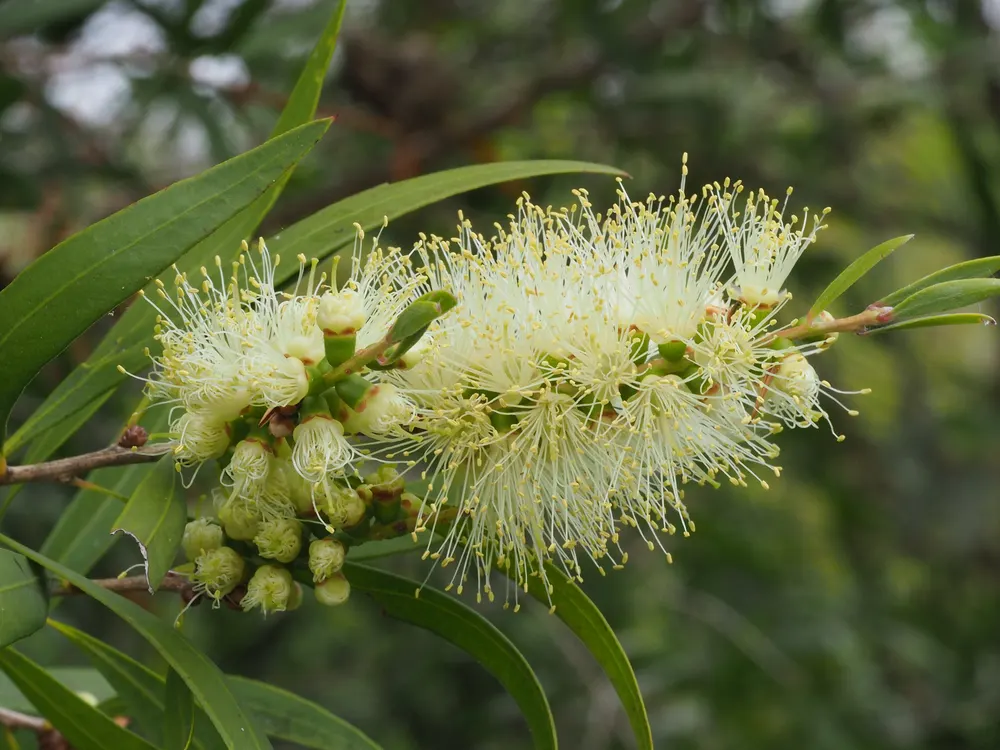
Photo: Geoff Derrin, CC BY-SA 4.0 (via Wikimedia Commons)
Willow Bottlebrush
Callistemon salignus
Also known as White Bottlebrush, Willow-leaved Bottlebrush, Callistemon salignus, Melaleuca salignus
Key benefits
✦Traditional uses
✦Long before it graced ornamental gardens around the world, Willow Bottlebrush grew wild along the creeks and billabongs of eastern Australia, where its brush-shaped flower spikes brimmed with sweet nectar. Aboriginal communities in the region traditionally sucked the nectar directly from the fresh blossoms or steeped the flower heads in water to make a naturally sweet drink, a simple bush tucker pleasure rather than a medicine. The soft, papery bark and pliant willow-like foliage also found small everyday uses around camp, though it was the tree's steady nectar flow, and the parrots and honeyeaters it drew in, that made it a familiar and welcome sight. Today it is prized mostly as a garden and street tree, valued for the same qualities that made it worth noticing in the wild.
How to grow & use it
✦The full apothecary for Willow Bottlebrush
Traditional remedies and step-by-step preparations, a complete growing guide, and how to harvest, dry, and store it, all unlocked with HerbLens Unlimited.
- ✦Remedies & preparations
- ✦ Growing guide
- ✦Harvest & storage
From under $6 a month. Free plant identifications always included.
- ✦Kangaroo Paw
- ✦Grevillea
- ✦Native Lomandra grasses
- ✦Callistemon citrinus (Crimson Bottlebrush)
- ✦Melaleuca linariifolia (Snow-in-Summer)
“You want a graceful, water-loving native that turns a damp corner of the garden into a haven for honeyeaters and bees.”
Botanists have folded nearly all Callistemon species, including this one, into the genus Melaleuca after DNA studies showed the two groups were really one and the same, so you may see it labeled Melaleuca salignus in newer references.
Willow Bottlebrush has no significant toxicity on record but isn't an established food or medicinal herb, so treat it as ornamental. Handling the leaves or flowers can irritate skin for some people.