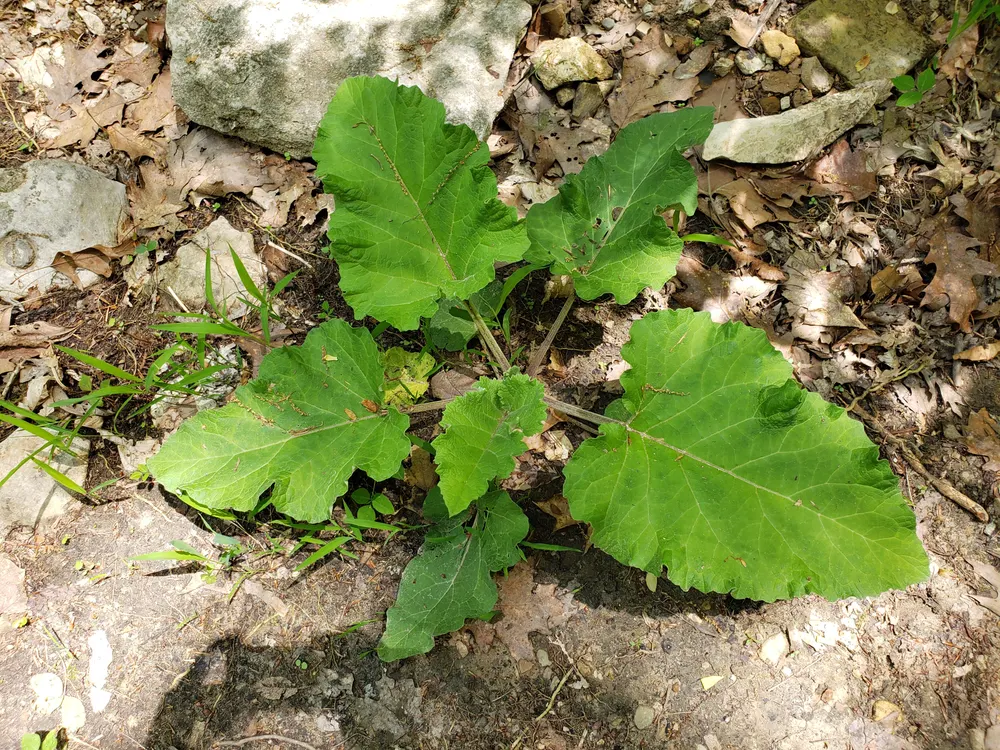
Photo: HoosierMan1816, CC BY 4.0 (via Wikimedia Commons)
Burdock
Arctium minus
Also known as Lesser Burdock, Common Burdock, Wild Burdock, Button-Bur
Key benefits
✦Traditional uses
✦Burdock has long been treasured by herbalists as a humble root with an outsized reputation, cherished as a spring tonic to help the body ease into a new season after a long winter. Old-time herbalists reached for it as a gentle bitter to stir digestion and as a traditional companion to skin troubles like blemishes and dryness, often paired with other cleansing roots. It traveled from the fields of Europe and Asia and settled comfortably into American hedgerows and kitchen gardens, where foragers came to know it as a reliable, unassuming ally. In Japan, a close cousin of this plant is cultivated outright as a root vegetable called gobo, prized for its earthy, slightly sweet flavor.
How to grow & use it
✦The full apothecary for Burdock
Traditional remedies and step-by-step preparations, a complete growing guide, and how to harvest, dry, and store it, all unlocked with HerbLens Unlimited.
- ✦Remedies & preparations
- ✦ Growing guide
- ✦Harvest & storage
From under $6 a month. Free plant identifications always included.
- ✦Dandelion
- ✦Yellow Dock
- ✦Milk Thistle
- ✦Yellow Dock
- ✦Dandelion Root
“For the quiet, unglamorous work of easing digestion and supporting skin from the inside out, the humble burr root has earned its keep.”
In 1941, Swiss engineer George de Mestral came home from a walk to find burdock burrs clinging stubbornly to his wool trousers and his dog's fur. His curiosity about their tiny hooked bristles led him to invent Velcro.
Burdock root is a widely eaten food, though people allergic to ragweed or other daisy-family plants may react to it, and medicinal amounts are traditionally avoided in pregnancy. It may have a mild blood-sugar-lowering or diuretic effect, so be cautious with diabetes medication, diuretics, or lithium. When foraging, take care: young burdock rosettes can resemble toxic plants like deadly nightshade or foxglove.