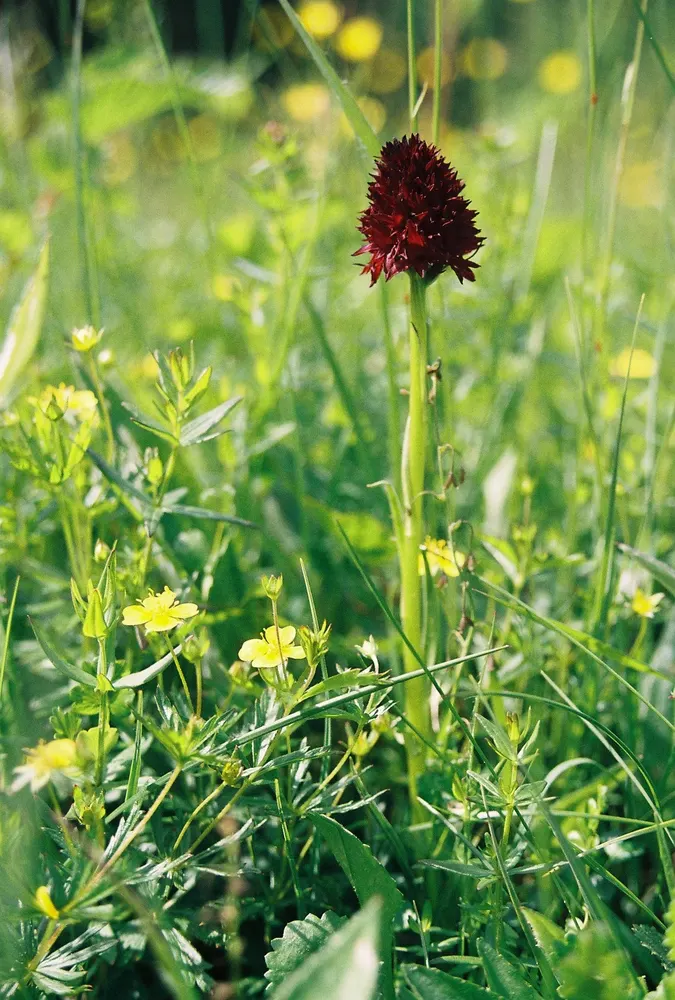
Photo: Photo2222, CC BY-SA 3.0 (via Wikimedia Commons)
Black Vanilla Orchid
Nigritella nigra
Also known as Kohlröschen, Black Vanillorchis, Vanilla Orchid, Gymnadenia nigra
Key benefits
✦Traditional uses
✦For centuries, herders and villagers across the high Alps have paused mid-climb to bend down and sniff this small, near-black flower, startled every time by the warm scent of vanilla and dark chocolate rising from something so somber-looking. In parts of Switzerland, Austria, and northern Italy, the blossoms were once gathered in small handfuls to perfume a room, scent a pillow, or lend their aroma to homemade schnapps and, in some valleys, mountain cheeses. It was never a medicine chest herb so much as a beloved seasonal treat, the flower villagers watched for as a small, fragrant reward at the end of a long alpine spring. Because it is so slow growing and so tied to a fragile mountain ecosystem, that old habit of picking has largely given way to simply admiring it where it stands.
How to grow & use it
✦The full apothecary for Black Vanilla Orchid
Traditional remedies and step-by-step preparations, a complete growing guide, and how to harvest, dry, and store it, all unlocked with HerbLens Unlimited.
- ✦Remedies & preparations
- ✦ Growing guide
- ✦Harvest & storage
From under $6 a month. Free plant identifications always included.
- ✦Linden flower
- ✦Chamomile
- ✦Alpine yarrow
- ✦True vanilla bean (Vanilla planifolia)
- ✦Heliotrope flower
“For the moment you catch the scent of vanilla drifting across a windswept alpine meadow and have to kneel down to find where it is coming from.”
The name Nigritella comes from the Latin niger, meaning black, for the flower's deep maroon-black color, which makes its scent all the more surprising. Crush or warm the tiny blossoms and they release a fragrance almost indistinguishable from vanilla and cocoa, which is exactly why German-speaking Alpine communities nicknamed it Kohlröschen, or little coal rose.
Nigritella nigra is a protected and, in many parts of its Alpine range, vulnerable or endangered wildflower. Like all orchids, it falls under CITES Appendix II protections, and in Switzerland, Austria, Italy, France, and other range countries it is illegal or heavily restricted to pick, uproot, or remove from the wild. There is no well-documented tradition of internal medicinal use for this plant, and it should not be treated as a health remedy. Anyone drawn to its history or its remarkable vanilla fragrance is best served by seeking it out ethically, through cultivated or already-dried material of confirmed legal origin, admiring it in its native meadows without picking, or simply enjoying true vanilla as a substitute. As always, speak with a qualified herbalist, botanist, or local conservation authority before using or foraging any wild plant.