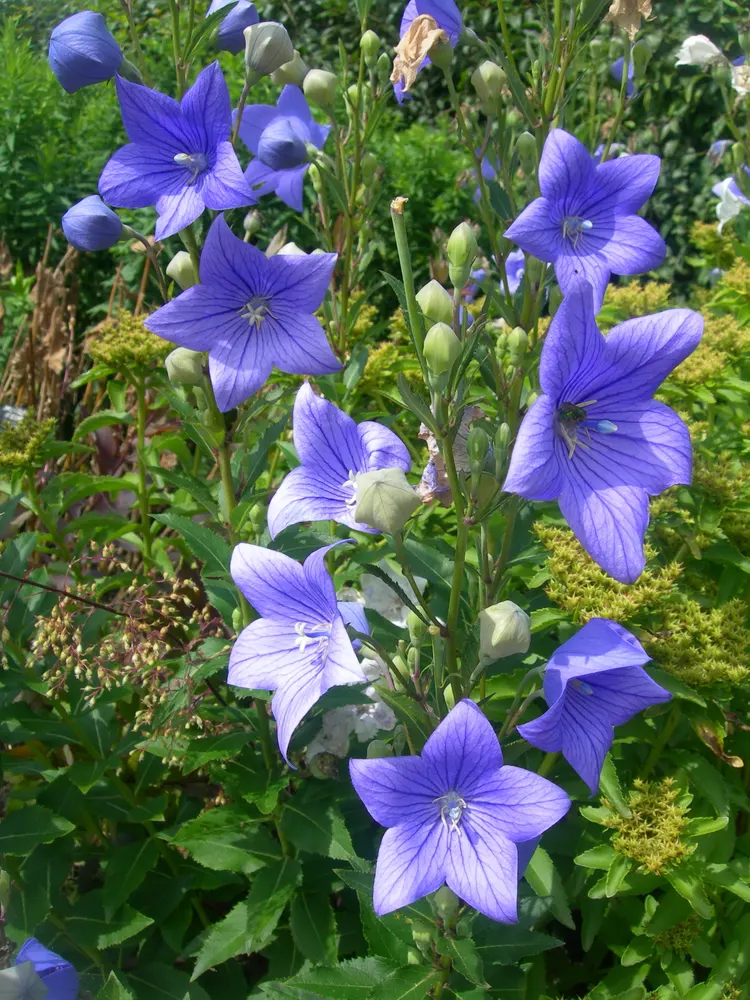
Photo: CC BY-SA 3.0 (via Wikimedia Commons)
Balloon Flower
Platycodon grandiflorus
Also known as Balloon Flower, Chinese Bellflower, Jie Geng, Doraji, Platycodon Root
Key benefits
✦Traditional uses
✦Under the name Jie Geng, the dried root of the balloon flower has been a cornerstone of Chinese herbal medicine for centuries, traditionally combined with other herbs to help clear the lungs and ease coughs heavy with phlegm. In Korea, the same root is known as doraji, where it crosses the line from medicine cabinet to dinner table as a beloved, crunchy banchan served at holidays and ancestral rites. Long before either tradition, farmers and foragers simply admired the plant for its theatrical buds, each one inflating like a tiny lantern before bursting open into a star.
How to grow & use it
✦The full apothecary for Balloon Flower
Traditional remedies and step-by-step preparations, a complete growing guide, and how to harvest, dry, and store it, all unlocked with HerbLens Unlimited.
- ✦Remedies & preparations
- ✦ Growing guide
- ✦Harvest & storage
From under $6 a month. Free plant identifications always included.
- ✦Licorice root
- ✦Fritillaria
- ✦Mulberry leaf
- ✦Fritillaria bulb
“For the season when the balloons burst open into stars, and a warming root tea feels like the right kind of comfort.”
Balloon flower buds inflate with trapped air before they open, giving the plant its common name, and if you gently squeeze a ripe bud it will pop with a small, satisfying sound, a trick that delights children in gardens across Korea and Japan.
Raw balloon flower root can irritate the mouth and throat, so it is always peeled and soaked or parboiled before eating, or simmered as a decoction when dried. Avoid it during pregnancy and breastfeeding, and use caution with bleeding disorders or blood-thinning medication.