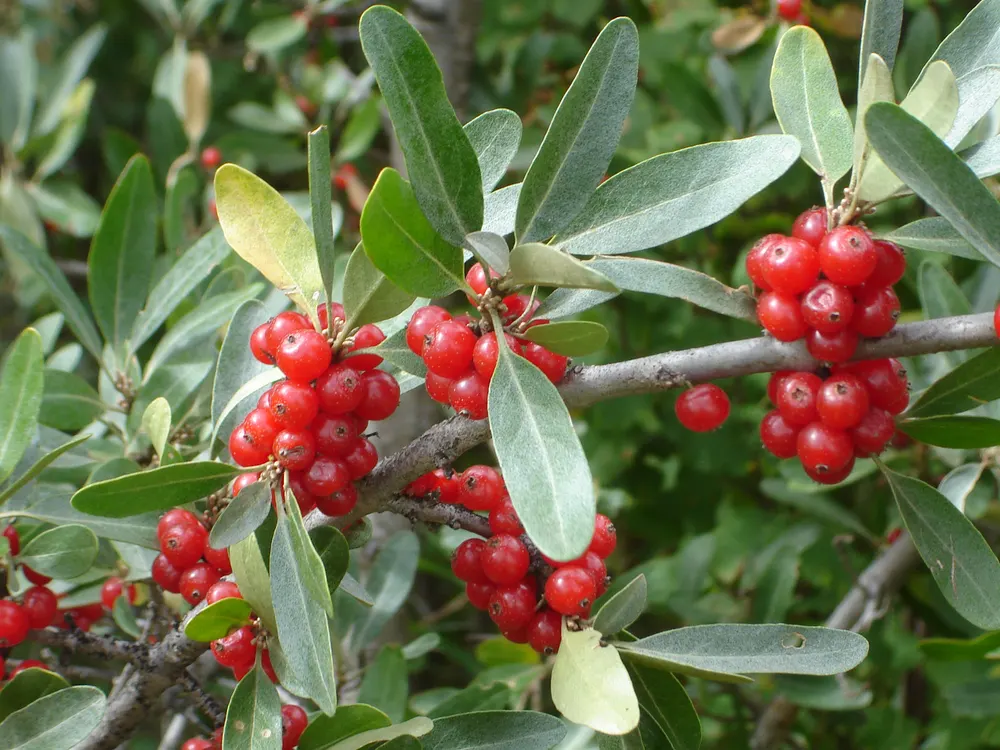
Photo: SriMesh, CC BY-SA 3.0 (via Wikimedia Commons)
Silver Buffaloberry
Shepherdia argentea
Also known as Buffalo berry, Nebraska currant, Silverleaf buffaloberry, Rabbitberry, Bullberry
Key benefits
✦Traditional uses
✦Silver buffaloberry was a treasured resource of the northern plains, gathered each autumn by peoples including the Blackfeet, Cheyenne, and Arikara, who harvested its tart, scarlet berries fresh, dried them into cakes for winter, or whipped them into a frothy dessert much like the one made from the related soapberry. Because the ripe fruit's sharp tang balanced the richness of roasted bison and other game, it was traditionally served alongside dried meat, a pairing that earned the shrub its common name. In lean winter months, the berries were also prized simply as a rare and welcome source of vitamins on the plains.
How to grow & use it
✦The full apothecary for Silver Buffaloberry
Traditional remedies and step-by-step preparations, a complete growing guide, and how to harvest, dry, and store it, all unlocked with HerbLens Unlimited.
- ✦Remedies & preparations
- ✦ Growing guide
- ✦Harvest & storage
From under $6 a month. Free plant identifications always included.
- ✦Rosehip
- ✦Juniper berry
- ✦Wild mint
- ✦Cranberry
- ✦Sea buckthorn
“For the tart, bright burst of a plains autumn, and a sauce that has graced roasted meat for generations.”
Meriwether Lewis noted this shrub in his journals during the Lewis and Clark expedition, describing its tart red fruit growing along the Missouri River. The plant is also dioecious and nitrogen-fixing, quietly enriching the poor prairie soils it colonizes even before anyone thinks to pick its berries.
Silver buffaloberry is not considered toxic, and its ripe berries have long been eaten as food. Raw berries contain natural saponins that can taste bitter or soapy and may cause mild stomach upset if eaten in large quantities, which is why they were traditionally cooked, dried, sweetened, or whipped into a froth before eating rather than consumed raw by the handful. The shrub itself is thorny, so gloves are wise when harvesting. As with any wild-gathered plant, positive identification matters, and pregnant or nursing women, and anyone with a health condition or on medication, should speak with a qualified healthcare provider before using it medicinally.