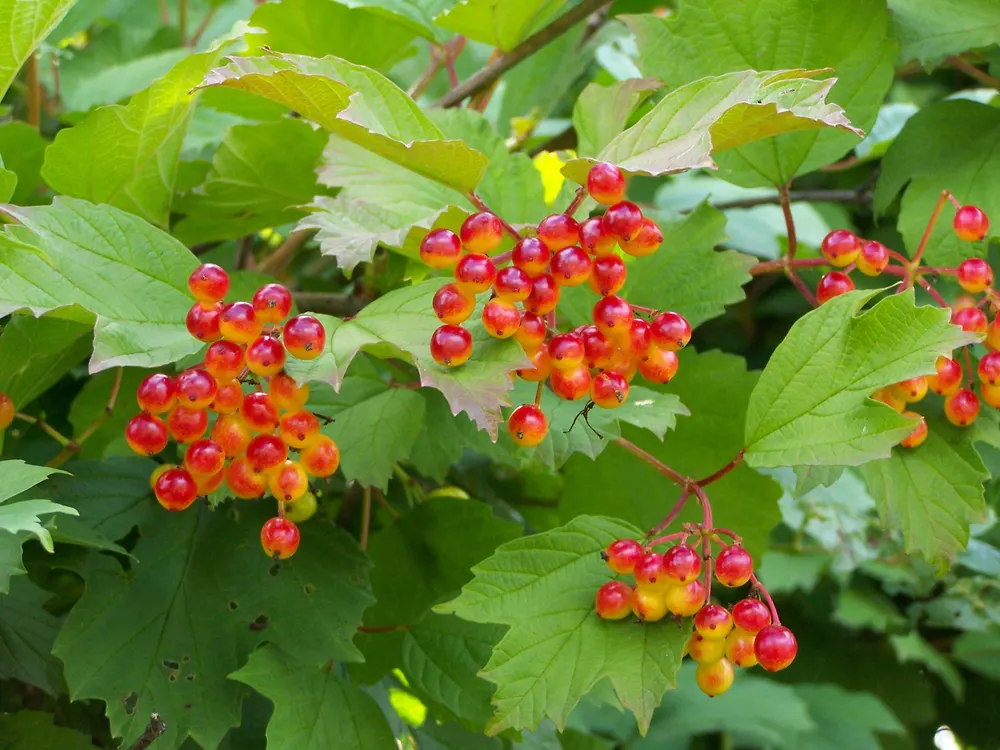
Photo: Lestat (Jan Mehlich), CC BY-SA 3.0 (via Wikimedia Commons)
Cramp Bark
Viburnum opulus
Also known as Cramp Bark, Guelder Rose, European Cranberrybush, Snowball Tree, Water Elder
Key benefits
✦Traditional uses
✦Cramp bark earned its common name honestly. For generations, herbalists have turned to the stripped bark of this hedgerow shrub to ease menstrual cramps, muscle spasms, and the kind of gripping tension that settles into the body. European folk healers and later the 19th century American Eclectic physicians both reached for it for what was then called female complaints, and it found a steady place in the home apothecary alongside chamomile and raspberry leaf. It was also brewed for the tightness that comes with a tense chest or an overworked back.
How to grow & use it
✦The full apothecary for Cramp Bark
Traditional remedies and step-by-step preparations, a complete growing guide, and how to harvest, dry, and store it, all unlocked with HerbLens Unlimited.
- ✦Remedies & preparations
- ✦ Growing guide
- ✦Harvest & storage
From under $6 a month. Free plant identifications always included.
- ✦Chamomile
- ✦Ginger
- ✦Motherwort
- ✦Black haw (Viburnum prunifolium)
- ✦Wild yam
“For the tight, gripping ache that won't let go until something in the body finally softens.”
The shrub's bright red berries, too sharp and irritating to eat raw, have long been cooked into preserves and drinks across Russia and Scandinavia, where it is called kalina and turns up again and again in folk songs as a symbol of home and young love.
The raw berries are bitter and can cause nausea or stomach upset if eaten, so they're not eaten fresh off the shrub. Because cramp bark acts on smooth muscle, including the uterus, it has traditionally been avoided during pregnancy, and it may add to the effects of sedatives or blood pressure medication.