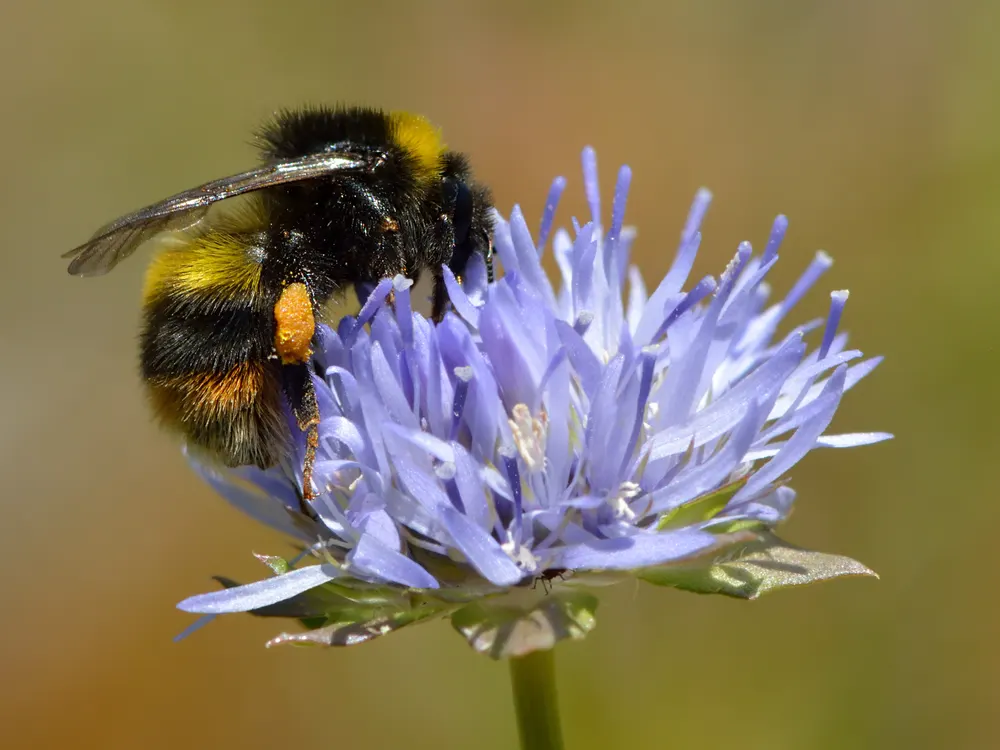
Photo: Ivar Leidus, CC BY-SA 4.0 (via Wikimedia Commons)
Sheep's Bit
Jasione montana
Also known as Sheep's Bit Scabious, Sheep's Scabious
Key benefits
✦Traditional uses
✦Jasione montana is better known for its everyday name than for any dose or draught passed down through the herbal tradition. It earned the name sheep's bit because flocks grazing thin, sandy hill pastures across western Europe would seek out its tufted blue flower heads among the gorse and heather, and shepherds came to read its presence on a hillside as a sign of poor, well-drained ground worth noting. Cottage gardeners later welcomed it into rockeries and dry borders for the same toughness that let it thrive where sheep once grazed, and its long-blooming pincushion flowers have made it a favorite waystation for bees and butterflies. Unlike many entries in the apothecary tradition, sheep's bit carries no documented history as a medicinal herb, its gift has always been to the pasture and the garden rather than the medicine chest.
How to grow & use it
✦The full apothecary for Sheep's Bit
Traditional remedies and step-by-step preparations, a complete growing guide, and how to harvest, dry, and store it, all unlocked with HerbLens Unlimited.
- ✦Remedies & preparations
- ✦ Growing guide
- ✦Harvest & storage
From under $6 a month. Free plant identifications always included.
- ✦Sea thrift (Armeria maritima)
- ✦Heather (Calluna vulgaris)
- ✦Harebell (Campanula rotundifolia)
- ✦Field scabious (Knautia arvensis)
- ✦Devil's-bit scabious (Succisa pratensis)
“For the dry, sandy corners where little else will bloom, and for the bees that always seem to find it there.”
Sheep's bit is often mistaken for a scabious because of its round, pincushion-like blue flower heads, but the resemblance is only skin deep. Scabious belongs to the honeysuckle family, while sheep's bit is a true member of the bellflower family, Campanulaceae, making the two unrelated plants a charming example of two different lineages arriving at the very same flower shape.
Sheep's bit has no significant recorded toxicity, but it also has no established history of internal or medicinal use, so it isn't a plant to eat or brew as a remedy.