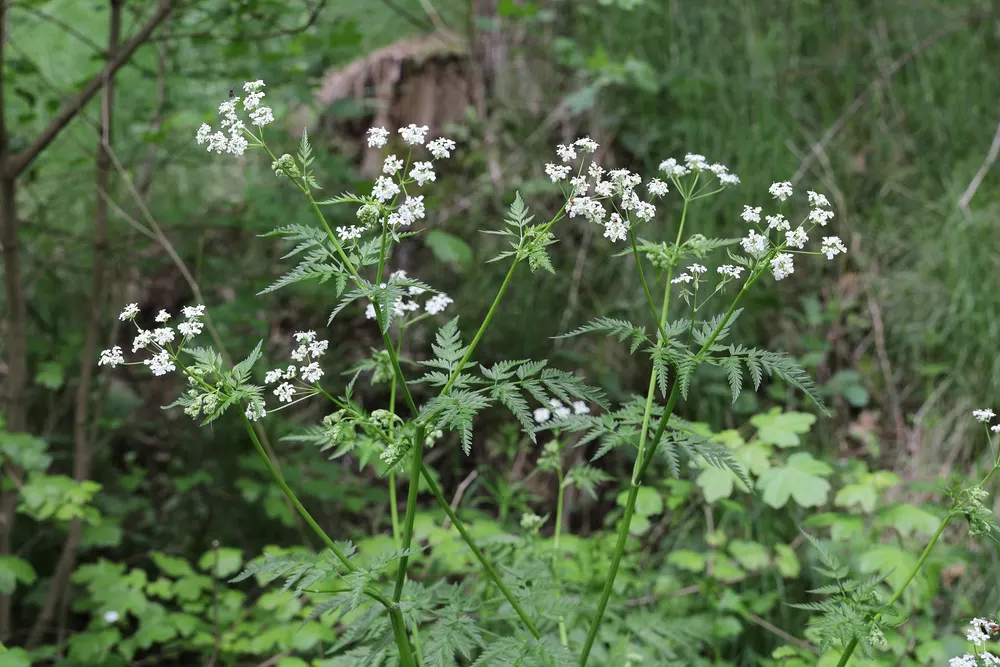
Photo: T. Kebert, CC BY-SA 4.0 (via Wikimedia Commons)
Cow Parsley
Anthriscus sylvestris
Also known as Wild Chervil, Keck, Wild Beaked Parsley, Mother-Die, Hedge Parsley
Key benefits
✦Traditional uses
✦Cow parsley has never held a real place in the herbalist's cabinet the way its cousins parsley and dill have. What it has instead is a long life in folklore and hedgerow memory, drifting through English lanes each spring in such thick white clouds that it earned nicknames like keck and Queen Anne's lace in regional speech. Country children were once warned that picking it would cause their mother to die, a superstition many historians believe was a practical scare tactic to keep young hands away from a plant so easily mistaken for deadly hemlock growing right alongside it. Its real legacy is visual and seasonal, the first great flush of white that signals hedgerows waking up after winter, rather than anything gathered for the table or the tincture bottle.
How to grow & use it
✦The full apothecary for Cow Parsley
Traditional remedies and step-by-step preparations, a complete growing guide, and how to harvest, dry, and store it, all unlocked with HerbLens Unlimited.
- ✦Remedies & preparations
- ✦ Growing guide
- ✦Harvest & storage
From under $6 a month. Free plant identifications always included.
- ✦Fennel
- ✦Angelica
- ✦Meadowsweet
- ✦Garden chervil (Anthriscus cerefolium)
- ✦Flat-leaf parsley
“For the misty white lace that fills a spring hedgerow, admired from the path rather than gathered in the hand.”
Cow parsley's folk name 'mother-die' comes from generations of British parents warning children never to pick it, a superstition that likely grew out of very real fear that a child could easily confuse it with deadly poison hemlock growing in the same hedgerow.
Cow parsley grows alongside deadly lookalikes like poison hemlock and hemlock water dropwort, and mistaking them has been fatal, so it should never be gathered for eating without expert identification. Its sap can also cause a skin reaction after sun exposure. HerbLens does not recommend cow parsley for eating or home preparation.