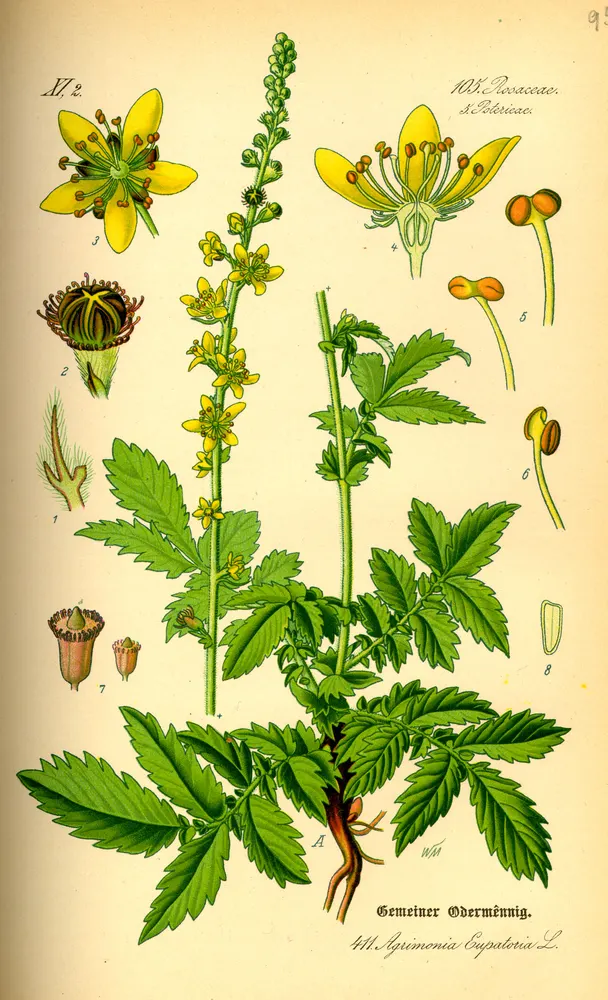
Photo: Public domain (via Wikimedia Commons)
Agrimony
Agrimonia eupatoria
Also known as Church Steeples, Sticklewort, Cocklebur, Aigremoine, Fairy's Wand
Key benefits
✦Traditional uses
✦Agrimony has been a fixture of the European herbalist's cupboard for centuries, prized above all as a gentle, drying astringent. Medieval wound-healers folded it into the famous vulnerary blend called arquebusade water, brewed to tend soldiers' battlefield injuries, and country herbalists carried it as a household standby for cuts, grazes, and upset stomachs alike. Anglo-Saxon leechbooks record it as a remedy for internal complaints and sluggish digestion, and its tall, steeple-like flower spikes made it as easy to spot in the hedgerow as it was to reach for at home. Generations of cottage gardeners also brewed a mild tea from the leaves simply as an everyday tonic drink, valued for its faintly apricot-like fragrance and gentle, tannic bite.
Growing guide
✦Fresh to dried
✦Traditional preparations
✦Agrimony Digestive Tea
A warming, faintly apricot-scented infusion traditionally sipped after meals to settle an uneasy stomach.
How it's made. Steep 1 teaspoon of the dried herb in 250 ml of just-boiled water for 10 minutes, then strain. Traditionally taken up to twice daily.
Agrimony Gargle
A cooled batch of the same tea, traditionally used as a soothing gargle for a scratchy or irritated throat.
How it's made. Brew as above, let the tea cool to room temperature, and gargle a small mouthful, spitting out rather than swallowing.
- ✦Chamomile
- ✦Peppermint
- ✦Meadowsweet
- ✦Lady's mantle
- ✦Cleavers
“For the quiet, steeple-tall herb that has soothed hedgerow travelers and tired stomachs since long before medicine had a name for gentle.”
Agrimony's tiny green seed pods are covered in hooked burs that catch on fur and clothing, which is exactly how the plant hitches a ride to new ground; that clinging habit earned it the old country nickname Sticklewort.
Agrimony is well tolerated as a traditional tea, though its tannins can reduce iron absorption if taken with meals or supplements. Because of its traditional association with blood clotting, use caution if you take blood-thinning medication, and avoid it if you have a rose-family allergy.