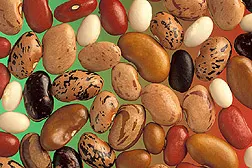
Photo: Public domain (via Wikimedia Commons)
Common Bean
Phaseolus vulgaris
Also known as French Bean, Kidney Bean, Snap Bean, Green Bean, Pinto Bean
Key benefits
✦Traditional uses
✦The common bean was domesticated independently in Mesoamerica and the Andes thousands of years ago, and it became one of the great staple foods of the Americas. Indigenous farmers grew it as one of the Three Sisters, planted alongside corn and squash in a partnership where the bean climbed the cornstalk and fed the soil with nitrogen while the squash shaded the ground below. After the Columbian exchange it traveled to Europe, Africa, and Asia and was folded into cuisines and folk medicine everywhere it landed. In European and Latin American folk herbalism, the dried pods, left over once the beans themselves were shelled, were simmered into a tea traditionally used to support healthy fluid balance and steady blood sugar.
How to grow & use it
✦The full apothecary for Common Bean
Traditional remedies and step-by-step preparations, a complete growing guide, and how to harvest, dry, and store it, all unlocked with HerbLens Unlimited.
- ✦Remedies & preparations
- ✦ Growing guide
- ✦Harvest & storage
From under $6 a month. Free plant identifications always included.
- ✦Corn
- ✦Squash
- ✦Epazote
- ✦Black-eyed pea
- ✦Lentil
“When you want a humble seed that has quietly fed the world for seven thousand years.”
The Three Sisters planting method used by Indigenous farmers across the Americas was a quiet feat of plant chemistry: the bean's roots fix nitrogen in the soil to feed the hungry corn, the cornstalk becomes the bean's living trellis, and the broad squash leaves shade the ground to keep weeds down and moisture in.
Raw or undercooked beans, especially red kidney beans, contain a natural toxin that can cause severe vomiting and diarrhea. Dried beans must be soaked and then boiled hard for at least 10 minutes before eating or slow cooking; a slow cooker alone doesn't reach a high enough temperature to destroy the toxin. Bean pod preparations used for blood sugar support may interact with diabetes medication or diuretics.