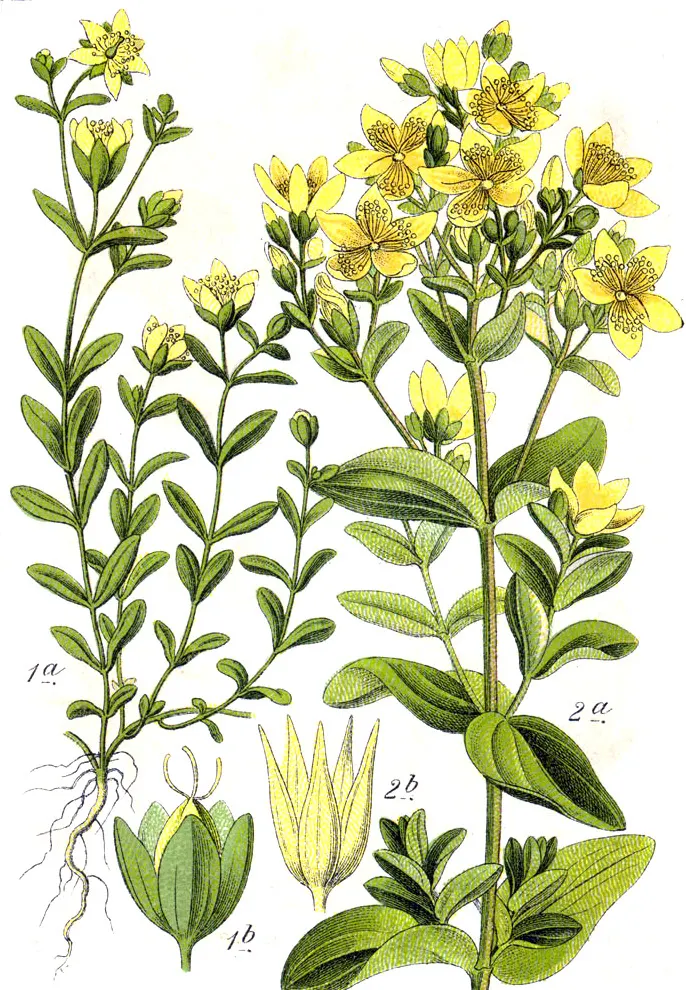
Photo: Johann Georg Sturm (Painter: Jacob Sturm), Public domain (via Wikimedia Commons)
Square-stalked St. John's Wort
Hypericum tetrapterum
Also known as St. Peter's Wort, Square-stemmed St. John's Wort, Winged St. John's Wort
Key benefits
✦Traditional uses
✦Square-stalked St. John's Wort has long lived in the shadow of its famous relation, common St. John's Wort, but country herbalists in damp corners of Europe gathered it just the same, especially where the ground was too wet for its sun-loving cousin to thrive. Its golden flowers were pressed into oil on cottage windowsills for generations, turning the oil a deep ruby red, and rubbed onto minor skin troubles, bruises, and burns. Old English herbals sometimes listed it under the name St. Peter's Wort, tying it to the same midsummer lore and saint's day gathering traditions as its more famous kin. Because the two species share much of their chemistry, wherever St. John's Wort grew scarce along a boggy field edge, this quieter wetland cousin often stood in for it.
How to grow & use it
✦The full apothecary for Square-stalked St. John's Wort
Traditional remedies and step-by-step preparations, a complete growing guide, and how to harvest, dry, and store it, all unlocked with HerbLens Unlimited.
- ✦Remedies & preparations
- ✦ Growing guide
- ✦Harvest & storage
From under $6 a month. Free plant identifications always included.
- ✦Lavender
- ✦Chamomile
- ✦Lemon Balm
- ✦Common St. John's Wort (Hypericum perforatum)
- ✦Lemon Balm
“For the boggy corner of the meadow where sunlight and water meet.”
The species name tetrapterum comes from the Greek for 'four-winged,' describing the four narrow ridges that run down its square stem, a feature old field botanists used to identify the plant in a marsh long before it ever came into flower.
Like Hypericum perforatum, this plant contains hypericin and hyperforin, which can cause photosensitivity and interact with many medications, including antidepressants, blood thinners, oral contraceptives, and immunosuppressants. Avoid during pregnancy and breastfeeding, and don't combine it with other mood-affecting medications.