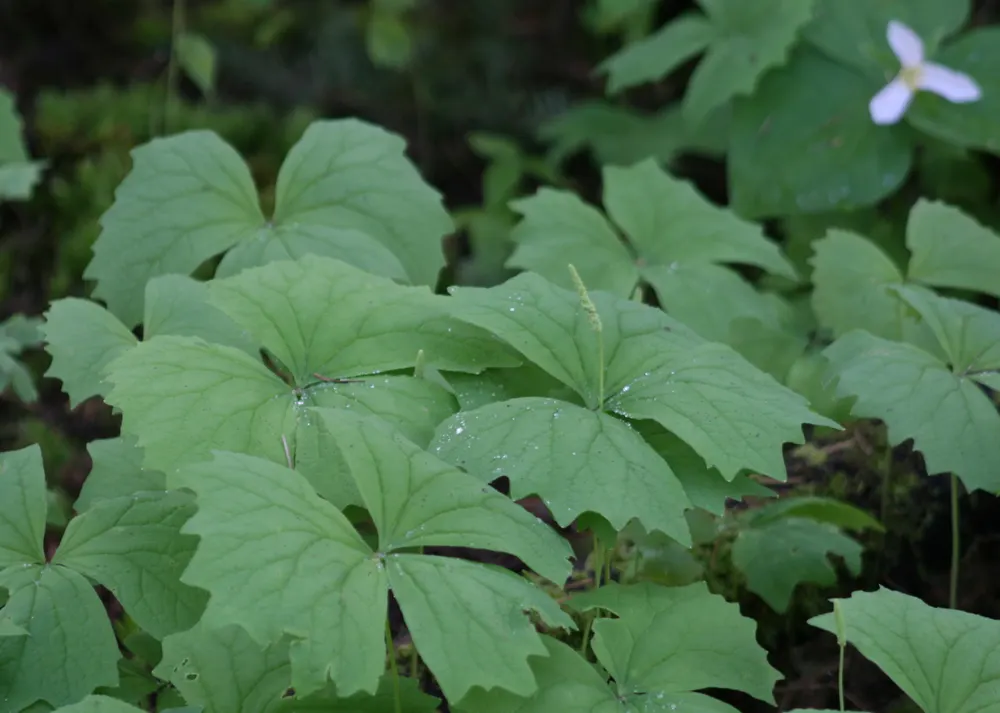
Photo: born1945 from Hillsboro, Oregon, USA, CC BY 2.0 (via Wikimedia Commons)
Vanilla Leaf
Achlys triphylla
Also known as Sweet After Death, Deer Foot, May Leaf, Vanilla-leaf
Key benefits
✦Traditional uses
✦Long before it had a place in any garden catalog, vanilla leaf carpeted the dim floor of old-growth cedar and fir forests, and the peoples of the Pacific Northwest coast knew it well. Bundles of the dried leaves were tucked among stored clothing and blankets or hung in dwellings for their sweet, hay-like scent, and hunters and gatherers reportedly rubbed the crushed leaves on their skin and clothing to help keep mosquitoes and gnats at bay while out in the woods. It was valued less as a medicine to be taken than as a quiet household companion, something to keep the air and the linens smelling clean through the damp forest months. The plant's whorled, three-part leaf has also simply made it a beloved marker of shaded native woodlands wherever it grows.
How to grow & use it
✦The full apothecary for Vanilla Leaf
Traditional remedies and step-by-step preparations, a complete growing guide, and how to harvest, dry, and store it, all unlocked with HerbLens Unlimited.
- ✦Remedies & preparations
- ✦ Growing guide
- ✦Harvest & storage
From under $6 a month. Free plant identifications always included.
- ✦Sweetgrass
- ✦Sweet woodruff
- ✦Cedar
- ✦Sweet woodruff
- ✦Deer's tongue leaf (vanilla plant)
“For the hush of deep conifer shade underfoot, and a whisper of vanilla that only arrives once the leaf has been let go and dried.”
Vanilla leaf is nearly scentless while growing. Only after it is cut and dried does it release its soft, hay-and-vanilla fragrance, a trait shared with sweetgrass and tonka bean and the reason old timers in the Pacific Northwest called it sweet after death.
Vanilla Leaf has no established history as a food or tea and isn't taken internally, and its fresh or dried foliage may irritate sensitive skin.