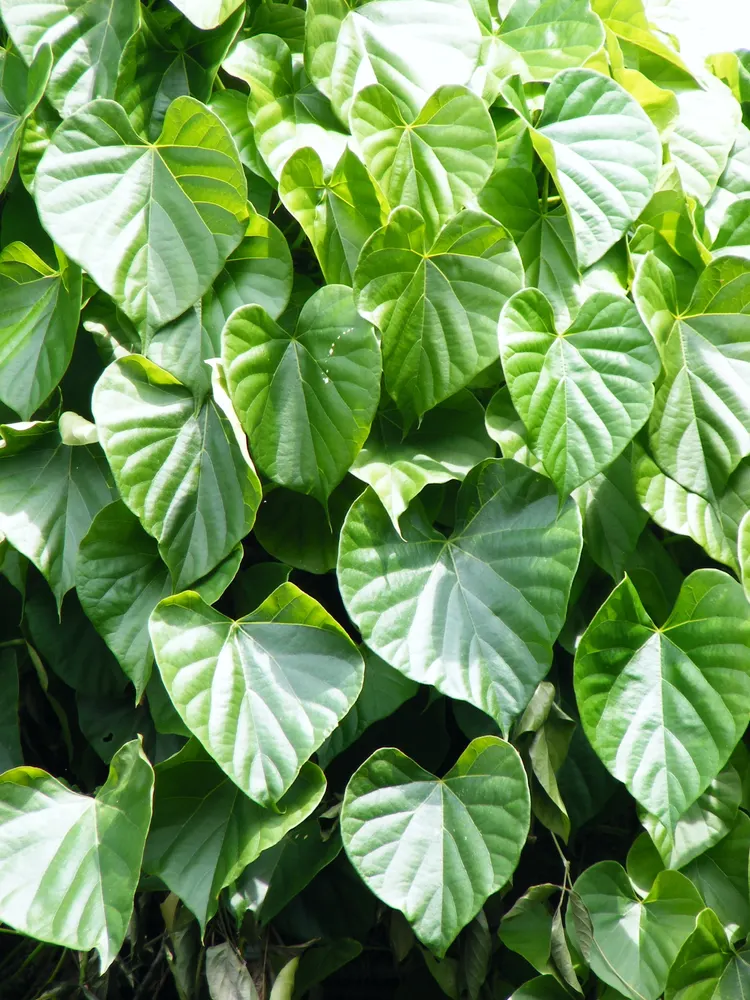
Photo: Tmd at Thai Wikipedia, Public domain (via Wikimedia Commons)
Guduchi
Tinospora cordifolia
Also known as Giloy, Amrita, Heart-leaved moonseed, Gulvel, Guduchi
Key benefits
✦Traditional uses
✦In Sanskrit, guduchi is called Amrita, the name of the mythic nectar of immortality, a name that speaks to how highly it has long been regarded in Ayurvedic medicine. For generations, Ayurvedic physicians have turned to its bitter stem as a rasayana, a rejuvenating tonic, traditionally used to help the body recover strength after illness and to ease the discomfort of recurring or seasonal fevers. It was also traditionally taken to settle the digestion and to support the liver through periods of strain. Village households across India have long kept a length of the vine growing up a garden tree, ready to cut a piece for a decoction whenever the family felt run down.
How to grow & use it
✦The full apothecary for Guduchi
Traditional remedies and step-by-step preparations, a complete growing guide, and how to harvest, dry, and store it, all unlocked with HerbLens Unlimited.
- ✦Remedies & preparations
- ✦ Growing guide
- ✦Harvest & storage
From under $6 a month. Free plant identifications always included.
- ✦Ginger
- ✦Tulsi (Holy Basil)
- ✦Turmeric
- ✦Ashwagandha
- ✦Andrographis (kalmegh)
“When the season turns and the body feels like it needs steadying, guduchi has long been the vine reached for.”
The plant seems almost impossible to kill, a severed piece of vine left dangling from its host tree will often send down a new root and keep growing, which is likely part of why it earned the name Amrita, the nectar of immortality.
Guduchi is widely used in Ayurveda, but concentrated Guduchi and Giloy supplements have been linked to rare, serious liver injury, so avoid it if you have liver disease. It may also interact with medications for diabetes, blood pressure, or lithium, and isn't recommended for autoimmune conditions or during pregnancy and breastfeeding.