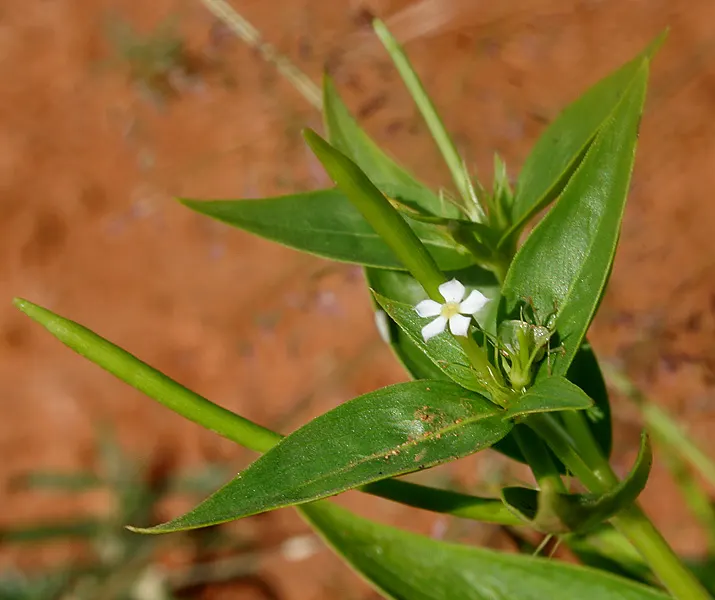
Photo: J.M.Garg, CC BY 3.0 (via Wikimedia Commons)
Tiny Periwinkle
Catharanthus pusillus
Also known as Little Periwinkle, Dwarf Periwinkle of India, Ran-kel, Tiloni
Key benefits
✦Traditional uses
✦Tiny periwinkle grows wild across the dry plains of India and Sri Lanka, a modest cousin to the showier Madagascar periwinkle that changed modern medicine. Village foragers and early botanists noted the plant more for its delicate white, yellow-eyed flowers than for any kitchen or tea use, and it never developed the folk apothecary tradition that many other flowering herbs did. Its real legacy belongs to the laboratory rather than the hearth, since twentieth-century phytochemists isolated cytotoxic alkaloids from its leaves while studying the wider Catharanthus family that eventually gave the world the chemotherapy drugs vincristine and vinblastine. It remains, in that sense, a quiet but scientifically important wildflower rather than a plant with a home remedy tradition.
How to grow & use it
✦The full apothecary for Tiny Periwinkle
Traditional remedies and step-by-step preparations, a complete growing guide, and how to harvest, dry, and store it, all unlocked with HerbLens Unlimited.
- ✦Remedies & preparations
- ✦ Growing guide
- ✦Harvest & storage
From under $6 a month. Free plant identifications always included.
- ✦Vinca minor (as a shade groundcover companion, ornamental only)
- ✦Portulaca (shares its sunny, dry garden conditions)
- ✦Echinacea (for those drawn to plants with a documented immune-supporting history)
- ✦Calendula (a safe, cheerful white-to-gold flowering herb for a similar garden look)
“For the quiet wonder of a fierce little wildflower best admired in the ground, not steeped in a cup.”
Tiny periwinkle is a close relative of Catharanthus roseus, the Madagascar periwinkle whose alkaloids gave rise to vincristine and vinblastine, two of the most important chemotherapy drugs ever developed. Researchers isolated an alkaloid called lochnerinine from Catharanthus pusillus itself and found it active against cancer cells in laboratory studies, making this humble little wildflower part of that same important pharmacological story.
Catharanthus pusillus is not safe to ingest. Like its well-known relative Catharanthus roseus, it produces potent terpenoid indole alkaloids, the same chemical family that yields the chemotherapy drugs vincristine and vinblastine. These compounds are cytotoxic and can cause serious harm if eaten, including gastrointestinal distress, nerve and blood-cell toxicity, and other systemic effects. The plant should be kept away from children and pets, and it should never be prepared as a tea, tincture, or food. There is no established safe home dose. This entry is for botanical and historical reference only. If you have been exposed to this plant or are considering any use of periwinkle-derived compounds, speak with a doctor, toxicologist, or other qualified professional rather than relying on home preparation.