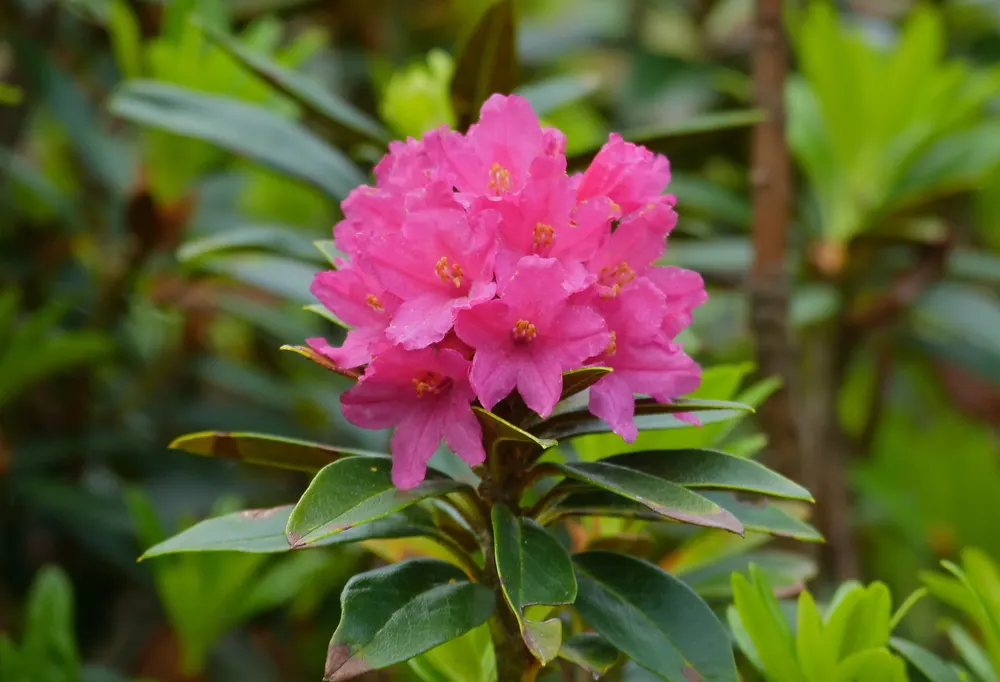
Photo: Bernard DUPONT from FRANCE, CC BY-SA 2.0 (via Wikimedia Commons)
Alpenrose
Rhododendron ferrugineum
Also known as Rusty-leaved Alpenrose, Alpine Rosebay, Almrausch, Snow-rose
Key benefits
✦Traditional uses
✦Alpenrose carpets the high slopes of the Alps in a blaze of pink-red just as the snow retreats, and for centuries it has been treated less as a medicine cabinet plant and more as a beloved emblem of the mountains themselves. Alpine herders called it Almrausch and watched their goats and cattle step carefully around it, a wariness that folk memory eventually turned into caution passed down through generations. Some old shepherd traditions describe burning the wood as incense or using the branches in folk veterinary practice around livestock, but never as something a person would eat or brew. Today it is protected across much of its range, prized for the sight of it blooming against granite and snowmelt rather than for anything gathered from it.
Growing guide
✦Fresh to dried
✦“For the moment a mountain slope turns pink at the edge of the snowline, not for anything you would pick and steep.”
Grazing animals in the Alps instinctively avoid alpenrose, which is one reason the shrub often forms such dense, uninterrupted sheets of pink across pastures where other plants have been eaten back.
Alpenrose contains grayanotoxins throughout its leaves, flowers, and nectar, which can cause serious poisoning in humans and livestock, including dangerously low blood pressure and irregular heartbeat. Honey made from its nectar can cause the same mad honey poisoning. This plant should never be ingested in any form, and children and pets should be kept away from it.