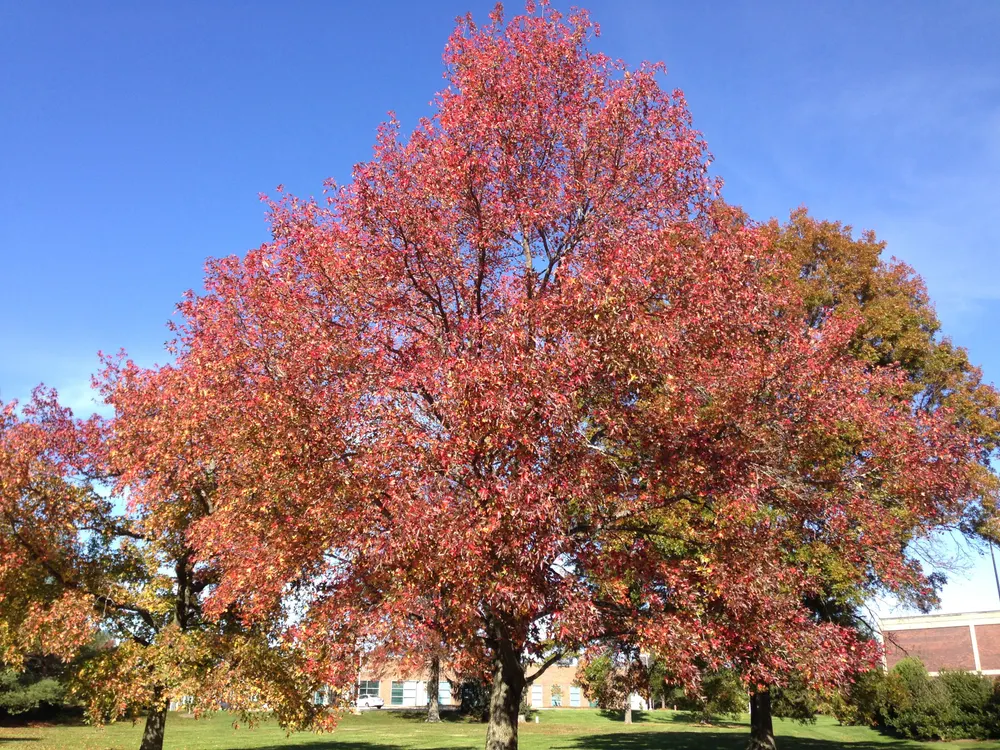
Photo: Famartin, CC BY-SA 4.0 (via Wikimedia Commons)
American Sweetgum
Liquidambar styraciflua
Also known as Sweetgum, Redgum, Star-leaved Gum, Alligatorwood, American Storax
Key benefits
✦Traditional uses
✦Long before it was planted for its blazing fall color, the sweetgum was known to Native American nations of the southeast, including the Choctaw, Cherokee, and Alabama, for the fragrant resin that weeps from cuts in its bark. That resin, sometimes called American storax, was chewed fresh like gum, rubbed on wounds and sores, and folded into salves meant to soothe the skin. Early American settlers learned the practice from Native neighbors and carried the habit into their own households, using the gum for coughs, sore throats, and stubborn skin troubles, and the sticky bark strips were sometimes simmered into a tea for the stomach. It became such a familiar dooryard remedy that soldiers on both sides of the Civil War reportedly chewed sweetgum resin to settle an unsettled gut when other medicine was scarce.
Growing guide
✦Fresh to dried
✦Traditional preparations
✦Sweetgum Resin Salve
A fragrant, balsamic salve traditionally patted onto minor cuts, scrapes, and dry or irritated skin, in the same spirit as benzoin or balsam salves.
How it's made. Traditionally, 1 tablespoon of softened sweetgum resin is gently warmed with 4 tablespoons of olive oil and 1 tablespoon of beeswax until melted and blended, then poured into a small tin to cool and firm before use.
Sweetgum Bark Tea
A mild, old-fashioned infusion once sipped for coughs and an unsettled stomach.
How it's made. Traditionally, a tea is made by simmering 1 teaspoon of dried inner bark in 250 ml of water for about 10 minutes, then straining before drinking.
- ✦Benzoin
- ✦Balsam of Peru
- ✦Mullein
- ✦Balsam of Peru
- ✦Pine resin
“For the tree whose autumn leaves burn like embers and whose amber tears once mended both wounds and coughs.”
The sweetgum's star-shaped leaves and spiky, hanging seed balls make it one of the most recognizable trees in the eastern woods, but its family tree is ancient: fossilized Liquidambar leaves nearly identical to today's have turned up in rock formations tens of millions of years old, making this tree a living echo of forests long gone.
The hardened seed balls are a real trip-and-fall hazard underfoot, and the fresh resin can irritate skin in sensitive people, so patch test before wider use. Raw resin shouldn't be taken internally beyond small, traditional amounts.