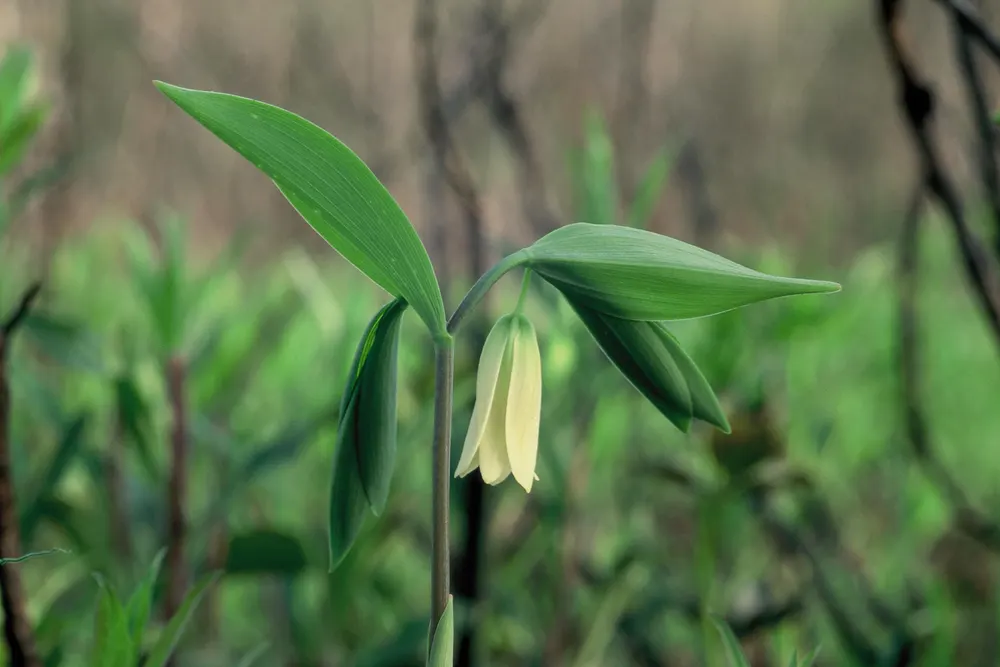
Photo: Shenandoah National Park from Virginia, Public domain (via Wikimedia Commons)
Sessileleaf Bellwort
Uvularia sessilifolia
Also known as Wild Oats, Little Merrybells, Strawbell, Sessile-leaved Bellwort
Key benefits
✦Traditional uses
✦Long before it was tucked into shade gardens, sessileleaf bellwort was quietly useful to the people who lived alongside it. The Iroquois are recorded to have prepared a root decoction as a folk remedy for stomach trouble and general debility, and the plant's drooping, throat-shaped flowers made it a natural candidate under the old doctrine of signatures for soothing a sore throat. Its young shoots, which push up through the leaf litter looking remarkably like slender asparagus spears, were also gathered in spring and cooked as a wild green, a practice foragers still follow today. It has never been a headline herb in Western herbalism, but it earned a small, steady place in the household remedies of the woodland peoples who knew it best.
How to grow & use it
✦The full apothecary for Sessileleaf Bellwort
Traditional remedies and step-by-step preparations, a complete growing guide, and how to harvest, dry, and store it, all unlocked with HerbLens Unlimited.
- ✦Remedies & preparations
- ✦ Growing guide
- ✦Harvest & storage
From under $6 a month. Free plant identifications always included.
- ✦Licorice root
- ✦Wild mint
- ✦Marshmallow root
- ✦Solomon's seal
- ✦Slippery elm
“For the hush of an early spring woodland walk, when pale bells nod along the trail and the forest floor is just waking up.”
The genus name Uvularia comes from the Latin uvula, because the plant's pale, nodding, bell-shaped flowers were thought to resemble the little dangling uvula at the back of the throat, the very feature that inspired its old-fashioned use as a sore throat remedy.
Generally non-toxic, and its shoots have long been eaten, but it grows among other woodland plants, so correct identification matters before foraging.