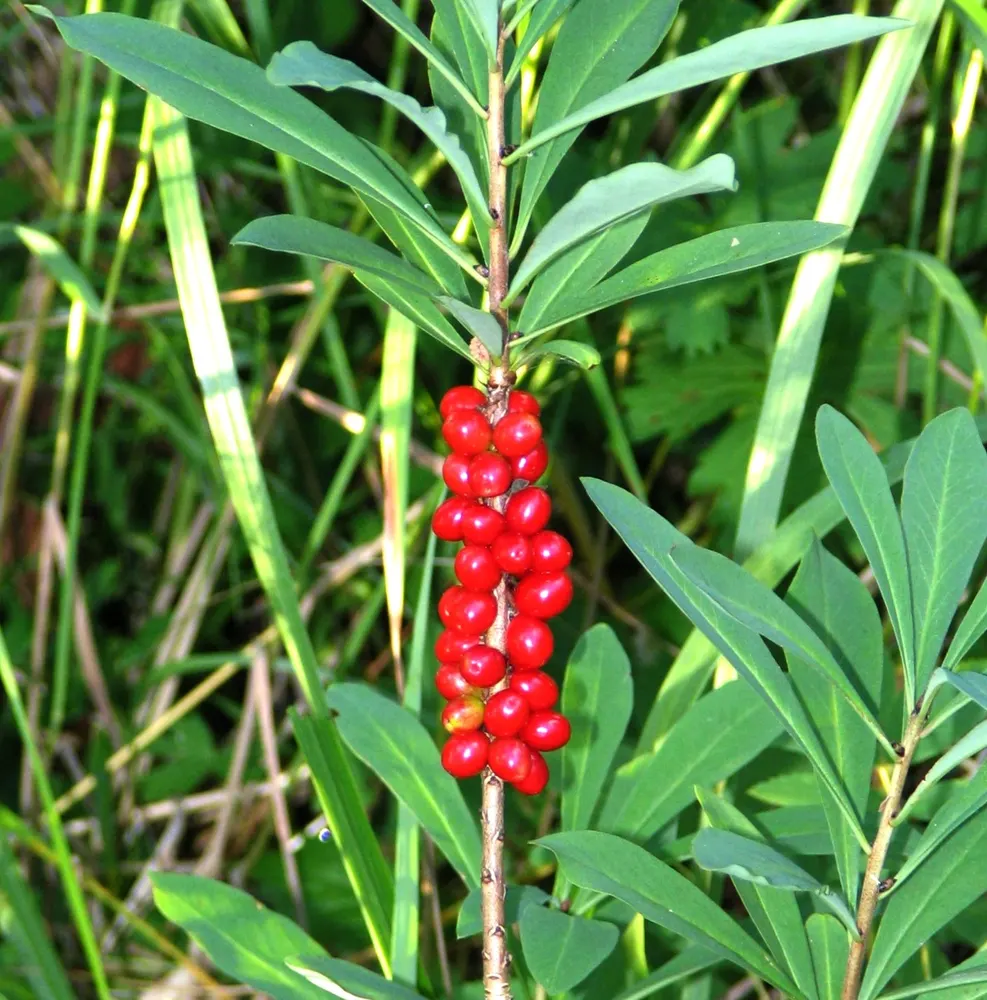
Photo: CC BY-SA 3.0 (via Wikimedia Commons)
Mezereon
Daphne mezereum
Also known as February Daphne, Spurge Olive, Wood Daphne, Paradise Plant
Key benefits
✦Traditional uses
✦Long before it was known as a garden ornamental, mezereon carried a fearsome reputation in European folk medicine. Herbalists from Culpeper's era onward described its bark being used, with great caution, as a blistering counterirritant rubbed onto the skin for rheumatism and old aches, and its berries were sometimes employed as a violent purgative. These uses have been abandoned entirely by modern herbalism because the line between a folk dose and a poisoning was far too thin, and mezereon survives today mostly in old herbals and poison compendiums rather than in any responsible remedy book.
How to grow & use it
✦The full apothecary for Mezereon
Traditional remedies and step-by-step preparations, a complete growing guide, and how to harvest, dry, and store it, all unlocked with HerbLens Unlimited.
- ✦Remedies & preparations
- ✦ Growing guide
- ✦Harvest & storage
From under $6 a month. Free plant identifications always included.
- ✦Snowdrops (Galanthus)
- ✦Hellebores
- ✦Winter aconite (Eranthis)
- ✦Witch hazel (Hamamelis) for winter fragrance and bloom
- ✦Viburnum x bodnantense for a safer scented winter shrub
“A shrub for the garden's quiet corner, prized for perfuming the coldest days of the year and handled always with respect.”
Mezereon's berries are so potent that old toxicology records note as few as a handful could be fatal to a child, yet thrushes and other birds eat them freely each autumn and are thought to help scatter the seeds, apparently immune to a poison that is so dangerous to us.
Daphne mezereum is genuinely dangerous and should never be eaten, brewed, or otherwise taken internally in any form. Every part of the plant, bark, leaves, flowers, and especially the bright red berries, contains toxic diterpene esters (including mezerein and daphnetoxin) that cause intense burning and blistering of the mouth and throat, severe vomiting, bloody diarrhea, and in serious cases collapse and death; historical poisoning records describe fatalities in children who ate only a small number of berries. Simply handling the bark, sap, or broken stems can cause skin irritation and blistering in sensitive individuals, so gloves are wise when pruning. This plant has no established safe internal use in modern herbalism, is unsuitable during pregnancy or breastfeeding under any circumstance, and should be planted well out of reach of children and pets. If ingestion is suspected, treat it as a medical emergency and contact poison control or a medical professional immediately rather than attempting any home remedy.