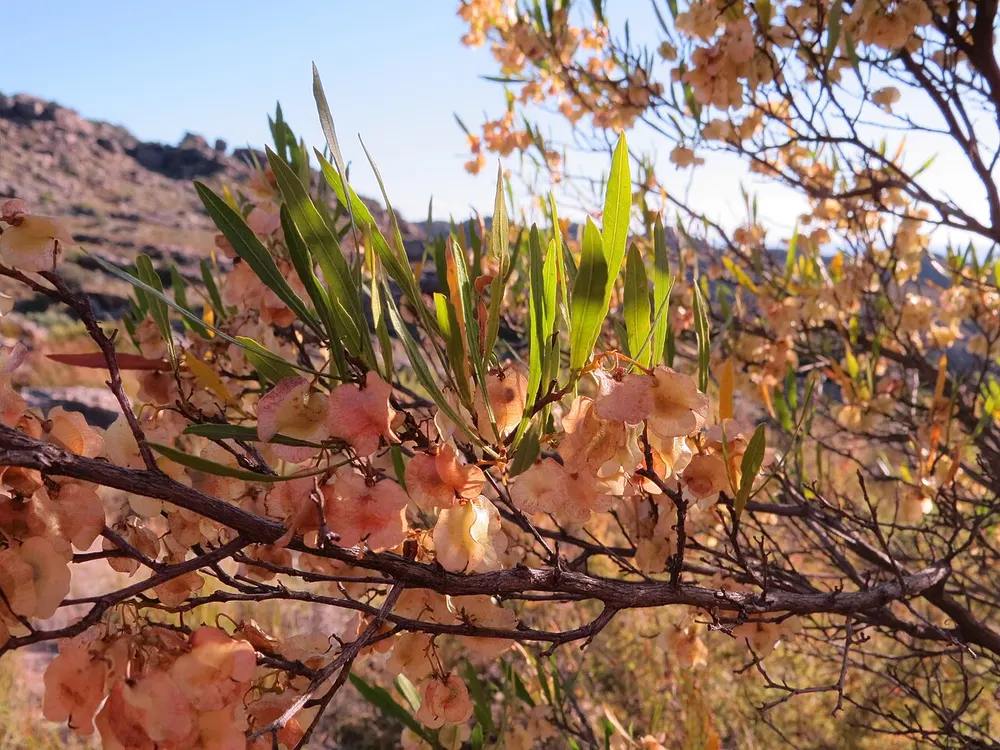
Photo: JonRichfield, CC BY-SA 4.0 (via Wikimedia Commons)
Hopbush
Dodonaea viscosa angustifolia
Also known as Narrow-leaf Hopbush, Sand Olive, Sticky Hopbush, Native Hop
Key benefits
✦Traditional uses
✦Across southern and eastern Africa, healers have long turned to the narrow, resinous leaves of hopbush for everyday complaints, chewing them for toothache and sore throat, or steeping them into a warming infusion for colds and fever. In Australia, where the plant also grows wild, Aboriginal communities chewed the leaves to numb pain and applied the sap to burns. Long before it was studied by scientists, this scrappy, sticky-leaved shrub earned its keep as a household remedy simply because it grew everywhere and always seemed to help.
How to grow & use it
✦The full apothecary for Hopbush
Traditional remedies and step-by-step preparations, a complete growing guide, and how to harvest, dry, and store it, all unlocked with HerbLens Unlimited.
- ✦Remedies & preparations
- ✦ Growing guide
- ✦Harvest & storage
From under $6 a month. Free plant identifications always included.
- ✦Honey
- ✦Ginger
- ✦Lemon
- ✦Sage
- ✦Plantain leaf
“For the dry, sun-scorched corner of the garden that needs a hardy hedge, and for the old-fashioned remedy tucked into a grandmother's memory.”
Early settlers in Australia found the papery, rose colored seed capsules bitter enough to substitute for real hops when brewing beer, which is exactly how this humble shrub earned the name hopbush.
Hopbush leaves contain saponins that can cause stomach upset in excess, and it should be avoided during pregnancy and breastfeeding.