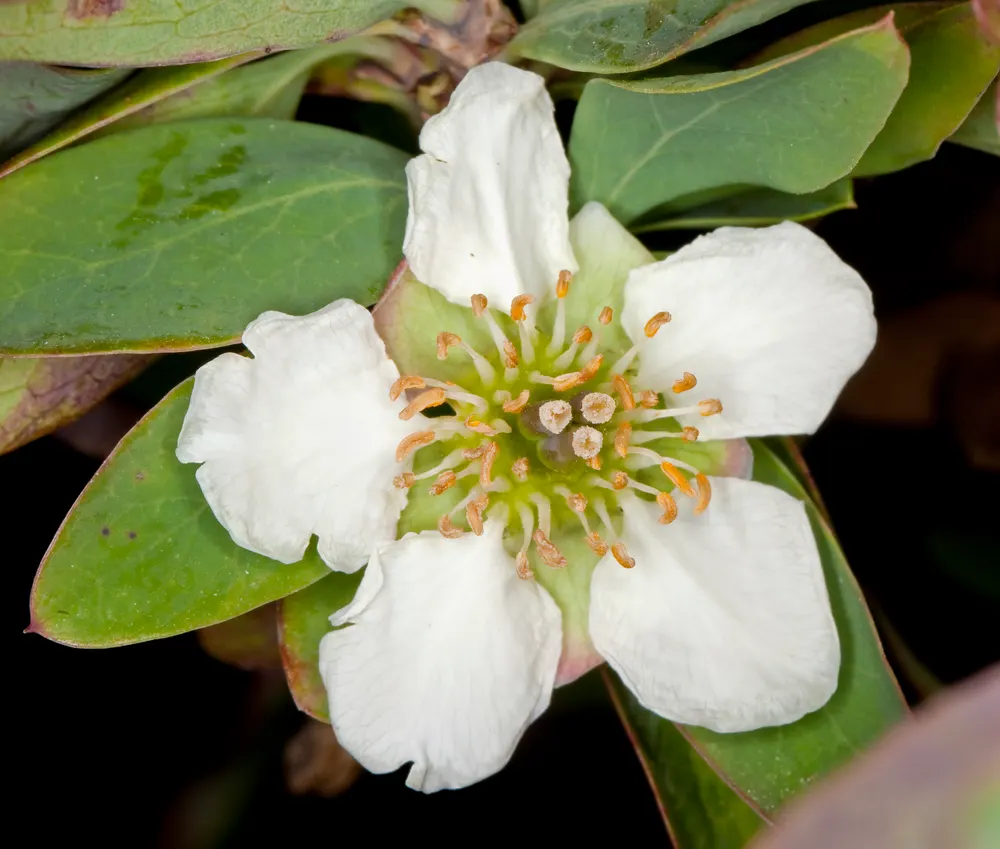
Photo: John Game, CC BY 2.0 (via Wikimedia Commons)
Catalina Crossosoma
Crossosoma californicum
Also known as Catalina Crossosoma, Island Crossosoma, Rock-flower
Traditional uses
✦Crossosoma californicum does not carry a documented history of medicinal or culinary use, and honestly, that absence is part of its story. It survives only in a handful of rocky, wind-battered pockets on Santa Catalina and San Clemente Islands, with a related population on Guadalupe Island off Baja California, so it never grew common enough, or close enough to people, to enter the kind of everyday use that builds a folk record. What history it does have belongs to botanists rather than healers: it was one of the plants that helped establish the small, ancient family Crossosomataceae, and today it is prized by native plant conservationists and collectors who work to keep an island rarity alive in cultivation. Its value has always been in simply persisting, not in being used.
How to grow & use it
✦The full apothecary for Catalina Crossosoma
Traditional remedies and step-by-step preparations, a complete growing guide, and how to harvest, dry, and store it, all unlocked with HerbLens Unlimited.
- ✦Remedies & preparations
- ✦ Growing guide
- ✦Harvest & storage
From under $6 a month. Free plant identifications always included.
“For the gardener who wants to grow a living fragment of a wind-carved island cliff.”
Crossosoma californicum belongs to Crossosomataceae, a tiny plant family with only a few species worldwide, and this particular shrub is found nowhere on Earth except a few rocky stretches of Santa Catalina Island, San Clemente Island, and Guadalupe Island, making it one of California's true botanical rarities.
There's no history of this plant being used as food or medicine and no safety data on it, so it shouldn't be eaten or applied to skin. It's a rare island endemic, so only nursery-propagated plants should be grown, never wild-collected specimens.