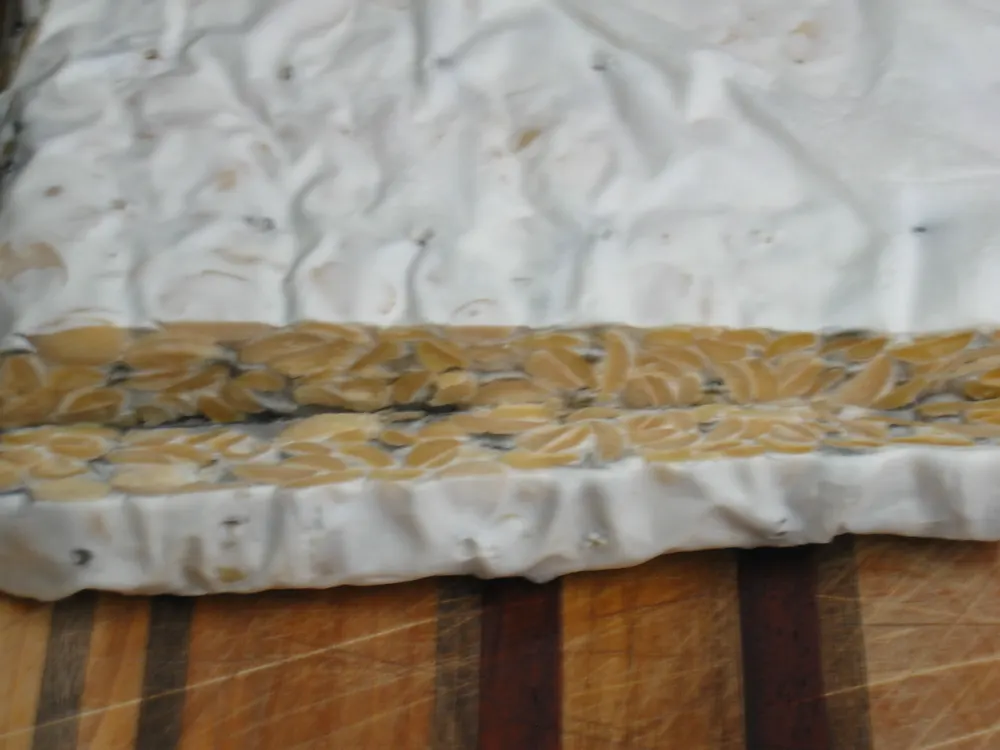
Photo: fisherjs, CC BY-SA 3.0 (via Wikimedia Commons)
Tempeh Mold
Rhizopus oligosporus
Also known as Tempeh Starter, Ragi Tempeh, Rhizopus Mold
Key benefits
✦Traditional uses
✦Rhizopus oligosporus is the living heart of tempeh, the firm, nutty soy cake that has fed the people of Java for centuries. Cooked, dehulled soybeans are inoculated with this mold and left to incubate, and within a day its white mycelium knits the beans into a single dense cake that can be sliced, fried, steamed, or simmered into soup. Long before refrigeration or industrial food science, Javanese cooks understood that this humble mold turned a plain legume into something more digestible, more flavorful, and remarkably shelf stable when kept properly. It remains one of the world's most successful traditional fermentations, prized as an everyday source of nourishment across Indonesia and, more recently, in kitchens worldwide.
How to grow & use it
✦The full apothecary for Tempeh Mold
Traditional remedies and step-by-step preparations, a complete growing guide, and how to harvest, dry, and store it, all unlocked with HerbLens Unlimited.
- ✦Remedies & preparations
- ✦ Growing guide
- ✦Harvest & storage
From under $6 a month. Free plant identifications always included.
- ✦Turmeric
- ✦Galangal
- ✦Garlic
- ✦Rhizopus oryzae
- ✦Aspergillus oryzae (koji)
“When you want to turn a humble pot of soybeans into a firm, nutty, deeply traditional cake bound together by nothing but warmth, patience, and this small white mold.”
The word tempeh comes from Old Javanese, and archaeological and culinary evidence suggests the fermentation tradition may be centuries old, making Rhizopus oligosporus one of the very few molds humans domesticated specifically to eat rather than to flavor or preserve something else.
This mold is safely used to make tempeh, but ferments should come from a reliable starter and be well cooked, since related Rhizopus species can cause serious infections in people with weakened immune systems.