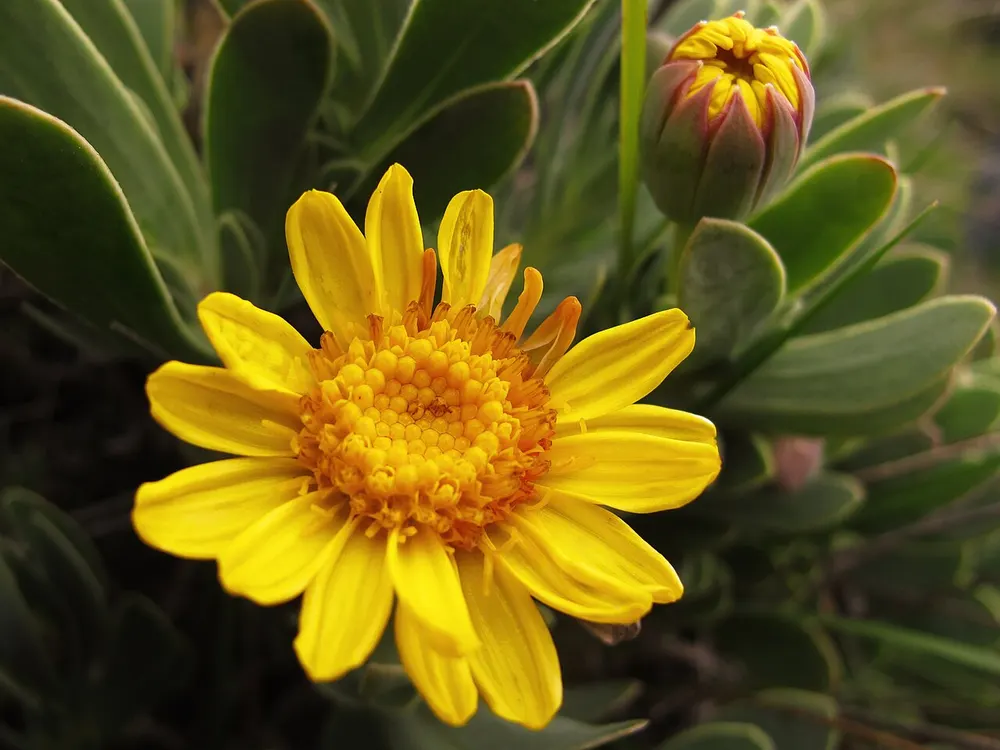
Photo: jacilluch, CC BY-SA 2.0 (via Wikimedia Commons)
Barbary Ragwort
Othonna cheirifolia
Also known as Silver Ragwort, Cabbage-Leaf Ragwort, Othonna, Barbary Groundsel
Key benefits
✦Traditional uses
✦Othonna cheirifolia has never held a place in the herbal medicine chest or the kitchen garden. Its story is a horticultural one rather than a medicinal one, a hardy little shrub gathered from the sun-scorched cliffs of North Africa and carried into Mediterranean and coastal gardens for the simple pleasure of its looks. Gardeners in dry-climate regions came to prize it for doing what few plants can, holding a cool, silvery blue color through the harshest heat and then lighting up with cheerful yellow daisies just when winter gardens need it most. Its value has always been ornamental and practical, a tough, low-water groundcover for the rock garden rather than a plant of the still room.
How to grow & use it
✦The full apothecary for Barbary Ragwort
Traditional remedies and step-by-step preparations, a complete growing guide, and how to harvest, dry, and store it, all unlocked with HerbLens Unlimited.
- ✦Remedies & preparations
- ✦ Growing guide
- ✦Harvest & storage
From under $6 a month. Free plant identifications always included.
- ✦Lavender
- ✦Santolina
- ✦Euphorbia
- ✦Senecio serpens (blue chalk fingers)
- ✦Curio repens (blue chalk sticks)
“For a patch of dry, sunbaked ground that needs quiet silver beauty and a burst of winter gold.”
The species name cheirifolia means "wallflower-leaved," a nod to how its thick, paddle-shaped, silvery leaves echo the foliage of the wallflower genus Cheiranthus, a resemblance botanists noticed long before the plant ever reached a garden bed outside North Africa.
Barbary ragwort belongs to a plant group that includes species toxic to livestock and containing harmful pyrrolizidine alkaloids, though this species itself has not been well studied. Treat it as ornamental only and keep it away from grazing animals and children.