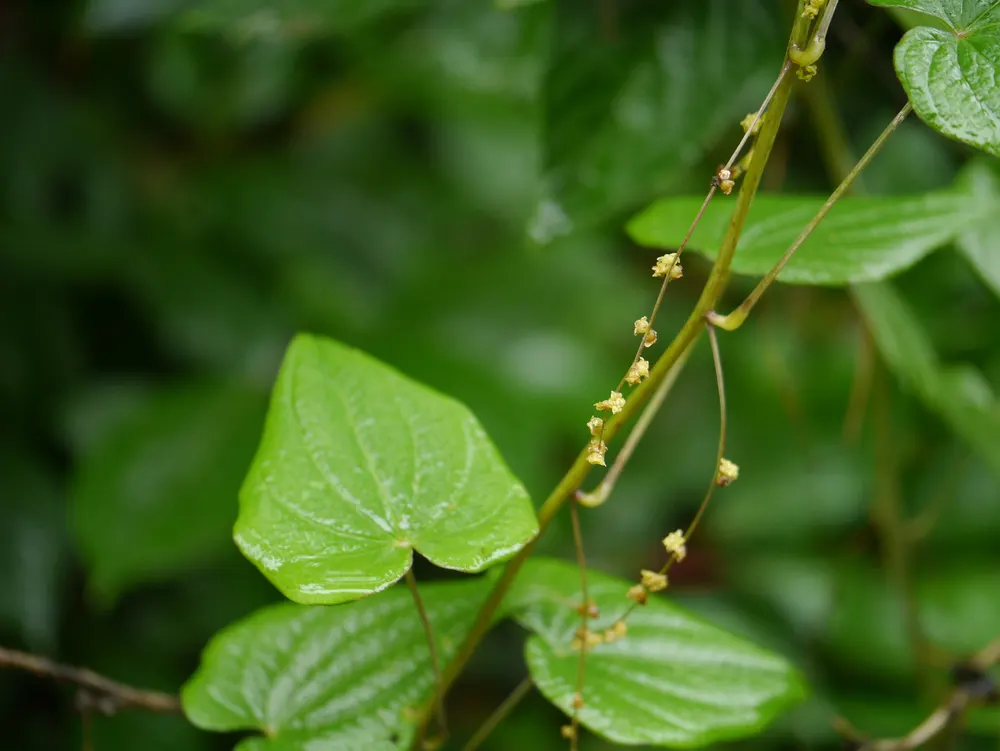
Photo: Dinesh Valke from Thane, India, CC BY-SA 2.0 (via Wikimedia Commons)
Himalayan Wild Yam
Dioscorea deltoidea
Also known as Kins, Singli Mingli, Deltoid Yam, Elephant's Foot Yam (regional, not to be confused with Amorphophallus)
Key benefits
✦Traditional uses
✦In the villages of the high Himalaya, the gnarled tuber of this climbing vine has long been dug, sliced, and processed by hill communities as a folk remedy for aching joints, skin complaints, and as a wash for livestock ailments. Its greater fame, though, came in the twentieth century, when chemists discovered its tuber was rich in diosgenin, a steroidal compound that could be converted in the laboratory into cortisone and other hormone medicines. That discovery turned a quiet mountain plant into one of the most sought after wild botanicals of the modern pharmaceutical age, and demand for its tubers reshaped both the herb's fortunes and its future in the wild.
How to grow & use it
✦The full apothecary for Himalayan Wild Yam
Traditional remedies and step-by-step preparations, a complete growing guide, and how to harvest, dry, and store it, all unlocked with HerbLens Unlimited.
- ✦Remedies & preparations
- ✦ Growing guide
- ✦Harvest & storage
From under $6 a month. Free plant identifications always included.
- ✦Turmeric
- ✦Ashwagandha
- ✦Guggul
- ✦Dioscorea villosa (the American wild yam more commonly used in Western herbalism)
“For the high, quiet slopes where a twining vine holds a root chemistry that once helped change the course of modern medicine.”
In the mid-twentieth century, chemists racing to mass-produce steroid hormones for the first time leaned heavily on wild Dioscorea species for their diosgenin, and Himalayan wild yam was harvested so heavily for this purpose across India that it helped push the species toward international protection under CITES.
The raw tuber contains saponins and can cause stomach upset if eaten, and it should be avoided during pregnancy and breastfeeding. Because of overharvesting, only nursery-grown plants should be sourced, never wild-dug tubers.