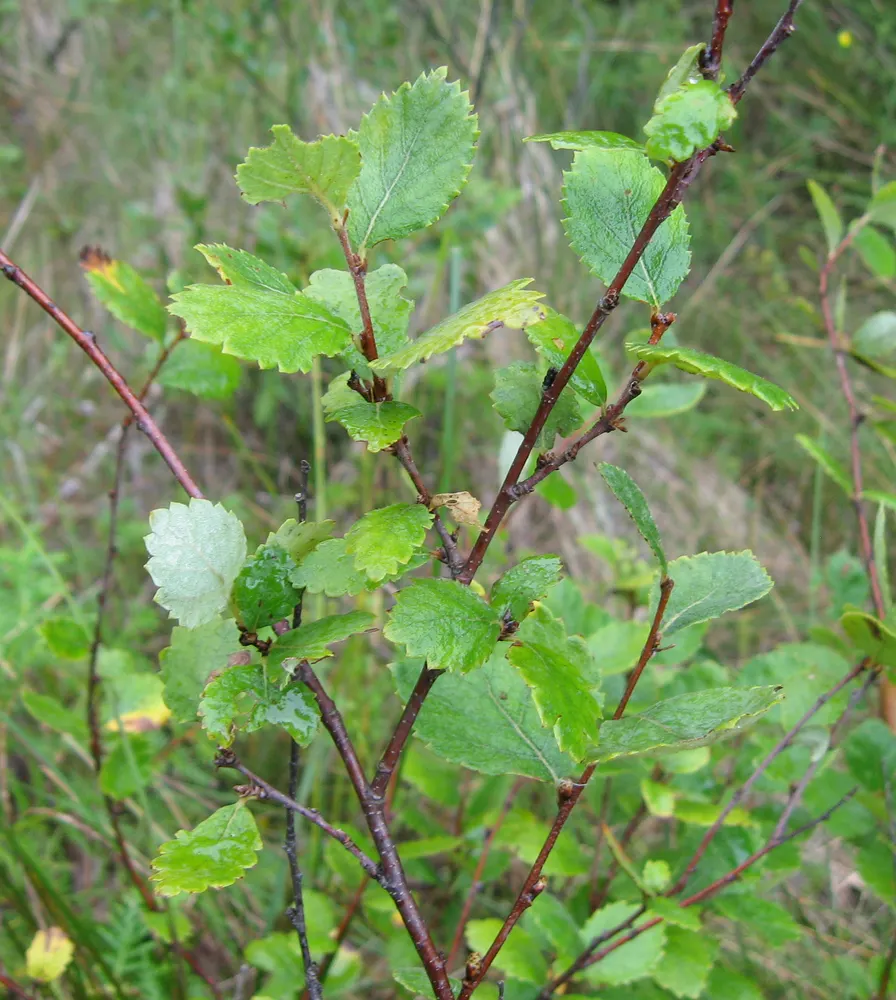
Photo: Mason Brock (Masebrock), Public domain (via Wikimedia Commons)
Bog Birch
Betula pumila
Also known as Dwarf Birch, Swamp Birch, Bog Birch
Key benefits
✦Traditional uses
✦Bog birch has long grown quietly at the edges of northern wetlands, easy to overlook next to its taller cousins, but northern peoples who lived close to these boggy places knew it well. Leaves and young bark, in the manner of other birches, were steeped into simple teas that were traditionally reached for to help move water through the body and to ease the ache of tired, swollen joints after hard work in cold country. The rounded, scalloped leaves and reddish-brown twigs were also valued as a gentle wash for the skin. Because it thrives only where the ground stays wet and cold, bog birch became something of a signpost, its presence telling travelers and gatherers exactly what kind of ground they were standing on.
How to grow & use it
✦The full apothecary for Bog Birch
Traditional remedies and step-by-step preparations, a complete growing guide, and how to harvest, dry, and store it, all unlocked with HerbLens Unlimited.
- ✦Remedies & preparations
- ✦ Growing guide
- ✦Harvest & storage
From under $6 a month. Free plant identifications always included.
- ✦Nettle
- ✦Dandelion Leaf
- ✦Meadowsweet
- ✦White Birch (Betula pendula) leaf
- ✦Nettle leaf
“For the quiet, water-loving corners of the herbal world, where a small birch keeps company with moss and standing water.”
Bog birch rarely grows as a single trunk. Instead it sends up a whole cluster of slender stems from the base, so a single old plant can look like a small thicket rather than one shrub.
Bog birch is not known to be toxic, but people with a birch pollen allergy, which can cross-react with apple, hazelnut, or celery, may react to its leaf preparations. It has a traditional diuretic effect, so use caution with kidney conditions.