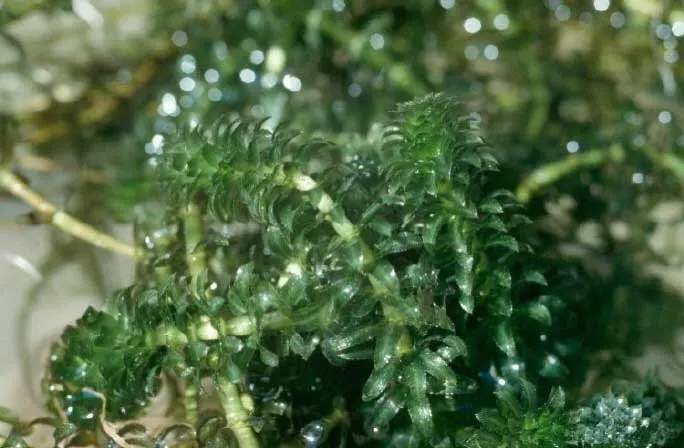
Photo: Public domain (via Wikimedia Commons)
Hydrilla
Hydrilla verticillata
Also known as Waterthyme, Esthwaite waterweed, Water thyme, Florida elodea
Key benefits
✦Traditional uses
✦Hydrilla verticillata has never been a fixture of the herbalist's cabinet the way land plants like mint or chamomile are. In parts of its native range across Asia, Africa, and Australia, it has quietly served as fodder for grazing waterfowl and fish and as a green manure worked into flooded rice paddies, a common thread of village pond life long before it had a Latin name. Its more famous story in North America began in the 1950s, when aquarium hobbyists in Florida released cuttings into local waterways, and the plant went on to become one of the continent's most notorious aquatic invaders. Today it is better known to biologists and lake managers than to herbalists, valued less as medicine and more as a case study in how fast a single plant can reshape a waterway.
How to grow & use it
✦The full apothecary for Hydrilla
Traditional remedies and step-by-step preparations, a complete growing guide, and how to harvest, dry, and store it, all unlocked with HerbLens Unlimited.
- ✦Remedies & preparations
- ✦ Growing guide
- ✦Harvest & storage
From under $6 a month. Free plant identifications always included.
“For understanding the quiet green thread that can take over a lake in a single season, not for the tea kettle.”
A single fragment of hydrilla no bigger than an inch, with just one leaf node attached, can take root and grow into an entirely new colony, which is exactly how boat propellers and trailers have carried it from lake to lake across the United States.
Not a food or medicinal plant. In the U.S. it's a federal noxious weed that's illegal to possess, transport, or plant in many states, so report sightings rather than collecting it.