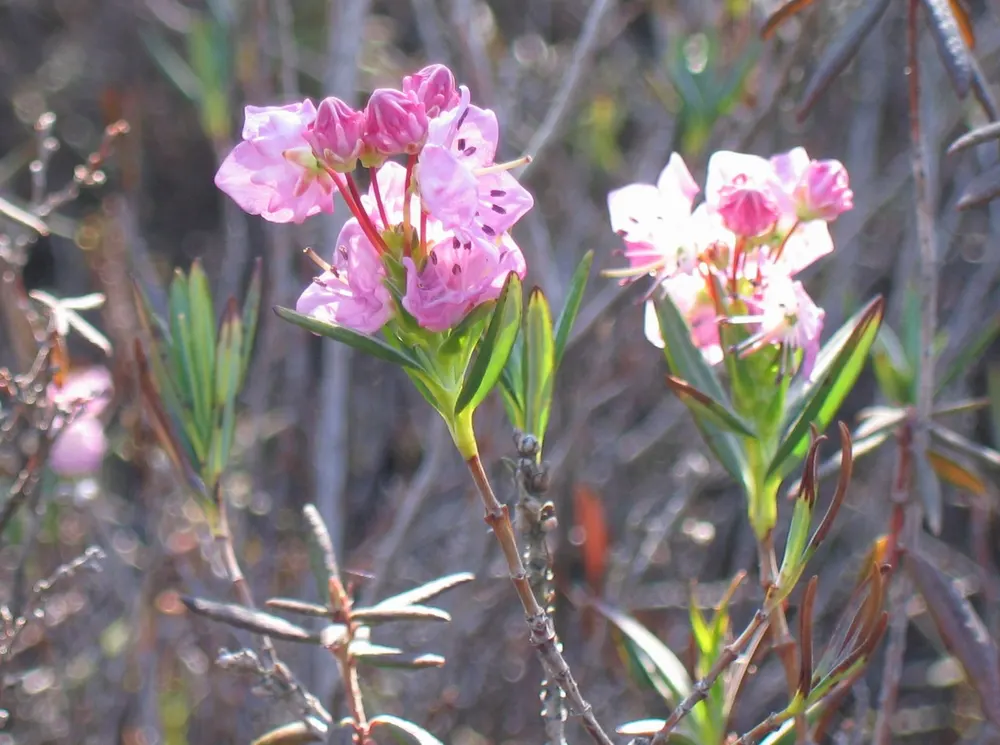
Photo: photo by user Meggar, CC BY-SA 3.0 (via Wikimedia Commons)
Bog Laurel
Kalmia polifolia
Also known as Bog Laurel, Swamp Laurel, Pale Laurel, Bog Kalmia
Key benefits
✦Traditional uses
✦Bog laurel has never held a place in the traditional herbal medicine chest, and for good reason: generations of foragers, trappers, and Indigenous peoples across its northern range learned to recognize and avoid it, passing down the knowledge that it could sicken or kill livestock that grazed on it. What survives in the historical record is mostly caution rather than use, old field notes warning shepherds to keep flocks from wet ground where the pink flowers bloomed. Its real legacy is ecological rather than medicinal, a hardy, quietly beautiful shrub that has anchored cold bogs for thousands of years, offering nectar to specialized pollinators and structure to some of the harshest wetland habitat in North America.
How to grow & use it
✦The full apothecary for Bog Laurel
Traditional remedies and step-by-step preparations, a complete growing guide, and how to harvest, dry, and store it, all unlocked with HerbLens Unlimited.
- ✦Remedies & preparations
- ✦ Growing guide
- ✦Harvest & storage
From under $6 a month. Free plant identifications always included.
- ✦Sphagnum moss
- ✦Cranberry (Vaccinium macrocarpon)
- ✦Labrador tea (Rhododendron groenlandicum)
- ✦Bog rosemary (Andromeda polifolia)
- ✦Sheep laurel (Kalmia angustifolia)
“Choose bog laurel not for the teacup, but for the quiet, waterlogged corners of the garden where its pink blossoms can glow undisturbed against green moss each spring.”
Kalmia flowers are small marvels of engineering: each blossom holds its ten stamens bent back under tension, like tiny loaded springs, so that when a bee lands and jostles the flower, the stamens snap forward and dust the visitor with a burst of pollen.
Bog laurel is poisonous and should never be eaten, brewed, or otherwise taken internally. Like its relatives mountain laurel and sheep laurel, every part of the plant, leaves, flowers, stems, and even the honey made from its nectar, contains grayanotoxins that disrupt normal heart and nerve function. Historically it has poisoned grazing sheep and goats (one of its old country names is "lambkill"), and in humans even small amounts can cause vomiting, dizziness, low blood pressure, and dangerous heart rhythm changes. There is no traditionally recognized safe internal dose, and it should be kept away from children, pets, and livestock. If you suspect exposure or ingestion, contact a poison control center or medical professional immediately rather than attempting any home remedy.