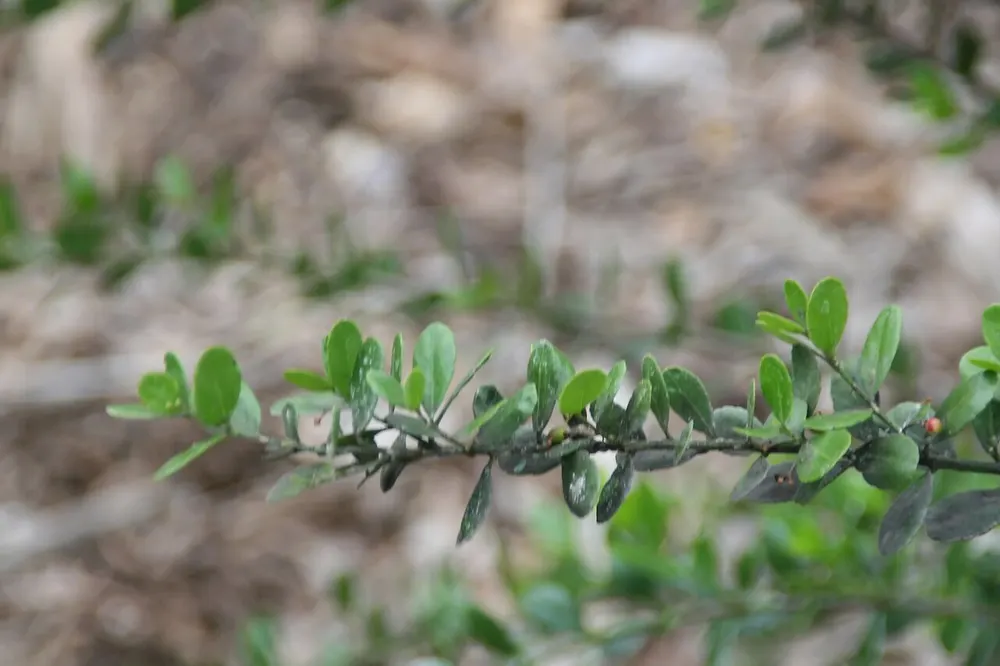
Photo: Photo by David J. Stang, CC BY-SA 4.0 (via Wikimedia Commons)
Rhacoma
Crossopetalum rhacoma
Also known as Florida crossopetalum, Rhacoma crossopetalum
Key benefits
✦Traditional uses
✦Rhacoma does not carry a documented history as a medicinal or culinary herb the way many of its garden neighbors do. What it does carry is a quiet botanical curiosity, it was one of the very plants Carl Linnaeus named in 1753, originally as Rhacoma crossopetalum, and later botanists flipped the name around to the Crossopetalum rhacoma we use today. In its native range it has long been valued simply for what it is, a tough little evergreen that holds its ground on bare limestone and feeds birds through its small red fruits. Today it is treasured mainly by native plant gardeners and conservationists working to keep Florida's vanishing pine rockland habitat alive.
How to grow & use it
✦The full apothecary for Rhacoma
Traditional remedies and step-by-step preparations, a complete growing guide, and how to harvest, dry, and store it, all unlocked with HerbLens Unlimited.
- ✦Remedies & preparations
- ✦ Growing guide
- ✦Harvest & storage
From under $6 a month. Free plant identifications always included.
“For the gardener restoring a small patch of vanishing Florida limestone, one tough evergreen at a time.”
Linnaeus originally named this plant Rhacoma crossopetalum in 1753. Later botanists decided the genus belonged with its relatives in Crossopetalum instead, so they simply swapped the two words around, turning it into Crossopetalum rhacoma, a rare case where a plant's old genus name lives on as its modern species name.
This plant has no history of eating or medicinal use and hasn't been studied for safety, so don't eat it. It's uncommon in the wild, so choose nursery-grown plants, and keep it away from pets and small children.