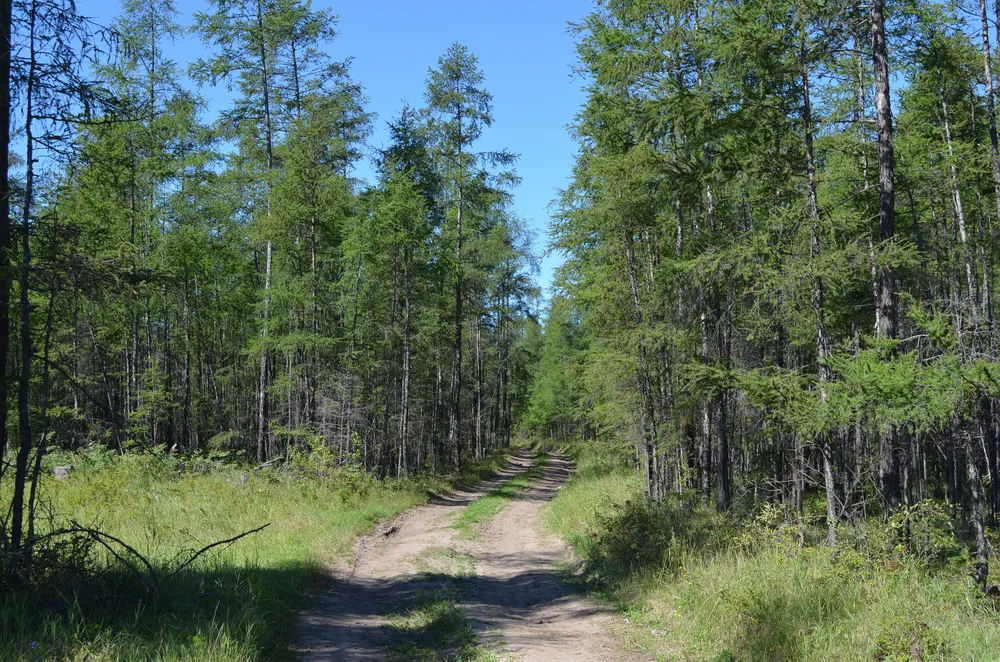
Photo: A. L. (loading), CC BY-SA 4.0 (via Wikimedia Commons)
Dahurian Larch
Larix gmelinii
Also known as Siberian Larch, Gmelin Larch, Daurian Larch, Larix dahurica
Key benefits
✦Traditional uses
✦Long before ships carried citrus fruit into the far north, Siberian peoples were steeping the young needles of the Dahurian larch into a sharp, resinous tea to guard against the long winter, a tradition rooted in the needles' notably high vitamin C content. The sticky amber resin that weeps from cut bark was chewed as a folk remedy for sore throats and gathered as a dressing for cuts and minor wounds. Its remarkably durable, rot-resistant timber also made it a cornerstone of Siberian building and shipbuilding for centuries, so much so that entire villages and the earliest stretches of the Trans-Siberian Railway were raised on larch beams and ties. In more recent herbal use, extracts of Larix species have been studied for arabinogalactan, a soluble fiber drawn from the wood.
How to grow & use it
✦The full apothecary for Dahurian Larch
Traditional remedies and step-by-step preparations, a complete growing guide, and how to harvest, dry, and store it, all unlocked with HerbLens Unlimited.
- ✦Remedies & preparations
- ✦ Growing guide
- ✦Harvest & storage
From under $6 a month. Free plant identifications always included.
- ✦Pine needle
- ✦Rosehip
- ✦Spruce tip
- ✦Eastern white pine needle
- ✦Tamarack (Larix laricina)
“For the deep midwinter, when the old northern forests still had their green tea growing on the branch.”
The Dahurian larch is one of the very few conifers that is not evergreen. Every autumn its needles turn a brilliant gold and drop entirely, a trait that lets the tree survive the brutal cold of its native Siberian permafrost, where it is counted among the northernmost trees on Earth.
Larch resin and needles can occasionally cause mild skin or allergic sensitivity, so try a small patch first if you have a conifer allergy or sensitive skin.