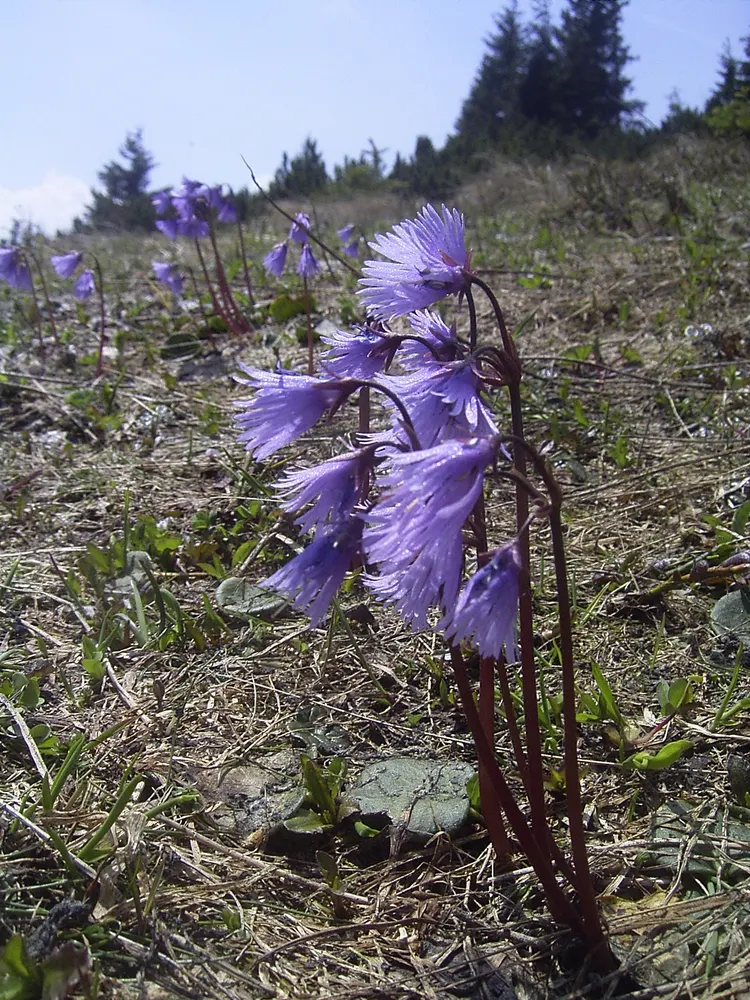
Photo: No machine-readable author provided. Denis Barthel assumed (based on copyright claims)., CC BY-SA 3.0 (via Wikimedia Commons)
Alpine Snowbell
Soldanella alpina
Also known as Alpine Snowbell, Fringed Snowbell, Alpenglöckchen
Key benefits
✦Traditional uses
✦Alpine snowbell has never held a place in the herbal medicine chest, but it has held a firm place in the hearts of mountain walkers and rock gardeners for centuries. Its nodding, fringed, violet-blue bells are often the very first flowers seen each year in the high Alps, sometimes opening within inches of a retreating snowbank while the surrounding turf is still frozen. Nineteenth-century alpine botanists prized it as a marker of the true high-mountain flora, and it was named for the Italian naturalist Giovanni Girolamo Soldani. Today it remains a beloved subject for alpine houses, troughs, and rock gardens, valued for its charm and toughness rather than for any traditional remedy.
How to grow & use it
✦The full apothecary for Alpine Snowbell
Traditional remedies and step-by-step preparations, a complete growing guide, and how to harvest, dry, and store it, all unlocked with HerbLens Unlimited.
- ✦Remedies & preparations
- ✦ Growing guide
- ✦Harvest & storage
From under $6 a month. Free plant identifications always included.
- ✦Gentian (as a fellow high-alpine companion planting)
- ✦Primrose (Primula species, for a similar cool-woodland rock garden setting)
- ✦Soldanella minima (Least Snowbell, a smaller alpine relative for tighter trough plantings)
“For the hush of the high Alps, in bloom before the snow has fully let go.”
Alpine snowbell is famous in mountaineering lore for pushing its fringed blooms up through thin, sun-warmed patches in the retreating snowpack, so early in the season that generations of alpine travelers believed the flower melted its own halo through the drift by generating heat. Later research found the truth is gentler: the plant is simply a master at finding the thinnest, weakest spots in the melting snow and reaching them the moment they open, racing winter rather than defeating it outright.
Soldanella alpina is not a recognized food or medicinal herb, and there is no reliable body of traditional or scientific evidence establishing it as safe to eat or ingest in any form, so it should not be consumed. In much of its native alpine range it also grows in fragile, slow-recovering turf and is protected or discouraged from picking under regional conservation rules, so it is best left undisturbed in the wild and enjoyed instead as a cultivated rock garden or alpine trough plant grown from nursery stock or responsibly sourced seed. As always, speak with a qualified botanist, herbalist, or healthcare professional before using any plant medicinally, and never eat a wild plant on the basis of a general reference alone.