Photo: Public domain (via Wikimedia Commons)
Carolina Snailseed
Cocculus carolinus
Also known as Carolina Coralbead, Redberry Moonseed, Carolina Moonseed
Key benefits
✦Traditional uses
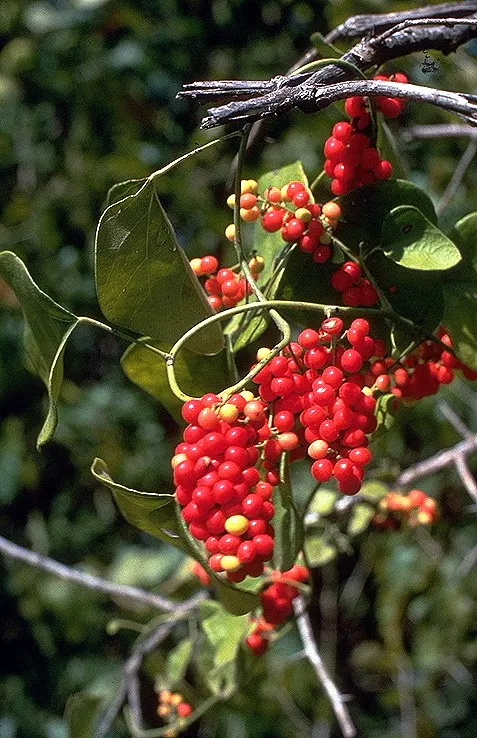
✦Carolina snailseed twines quietly through southern hedgerows and fence lines, mostly overlooked until autumn, when its strands of glassy coral-red berries catch the light. Unlike its Old World cousins in the genus Cocculus, several of which carried long histories as fish poisons and folk remedies measured out with great caution, this American vine has no meaningful tradition of medicinal or culinary use passed down among herbalists. What history it does have belongs mostly to the birds: cedar waxwings, mockingbirds, and robins have relied on its berries as cold-weather forage for generations, long before botanists ever wrote the plant's name in a field guide.
How to grow & use it
✦The full apothecary for Carolina Snailseed
Traditional remedies and step-by-step preparations, a complete growing guide, and how to harvest, dry, and store it, all unlocked with HerbLens Unlimited.
- ✦Remedies & preparations
- ✦ Growing guide
- ✦Harvest & storage
From under $6 a month. Free plant identifications always included.
“For the vine glowing with coral beads along an autumn fence line, one to name and admire, never to pick.”
Cocculus carolinus shares its genus with the historic 'fishberries' of Cocculus indicus, whose seeds contain picrotoxin, once used to stun fish for easy catching. Carolina snailseed carries none of that old trade, but every autumn its own berries do a quieter kind of work, feeding waxwings and mockingbirds that strip the vine clean and scatter its seeds unharmed, while people are wisest to simply enjoy the view.
All parts of Cocculus carolinus, and especially its glossy coral-red berries and roots, are considered toxic if eaten and should never be ingested. The plant belongs to the moonseed family, Menispermaceae, a family best known in other parts of the world for alkaloid-laden, dangerous species, including the genus's own notorious relative, Cocculus indicus, whose seeds (the old "fishberries" of trade) contain picrotoxin, a potent convulsant once used to stupefy fish and now recognized purely as a poison. Carolina snailseed's own toxicity has not been thoroughly studied in humans, but there is no tradition of safe internal use, and the bright, tempting berry clusters warrant real caution around children and pets. This entry is offered for identification and garden reference only, never as a guide to eating or preparing any part of the plant. If ingestion is ever suspected, contact poison control immediately, and speak with a qualified healthcare professional or toxicologist rather than relying on folk remedies for this species.