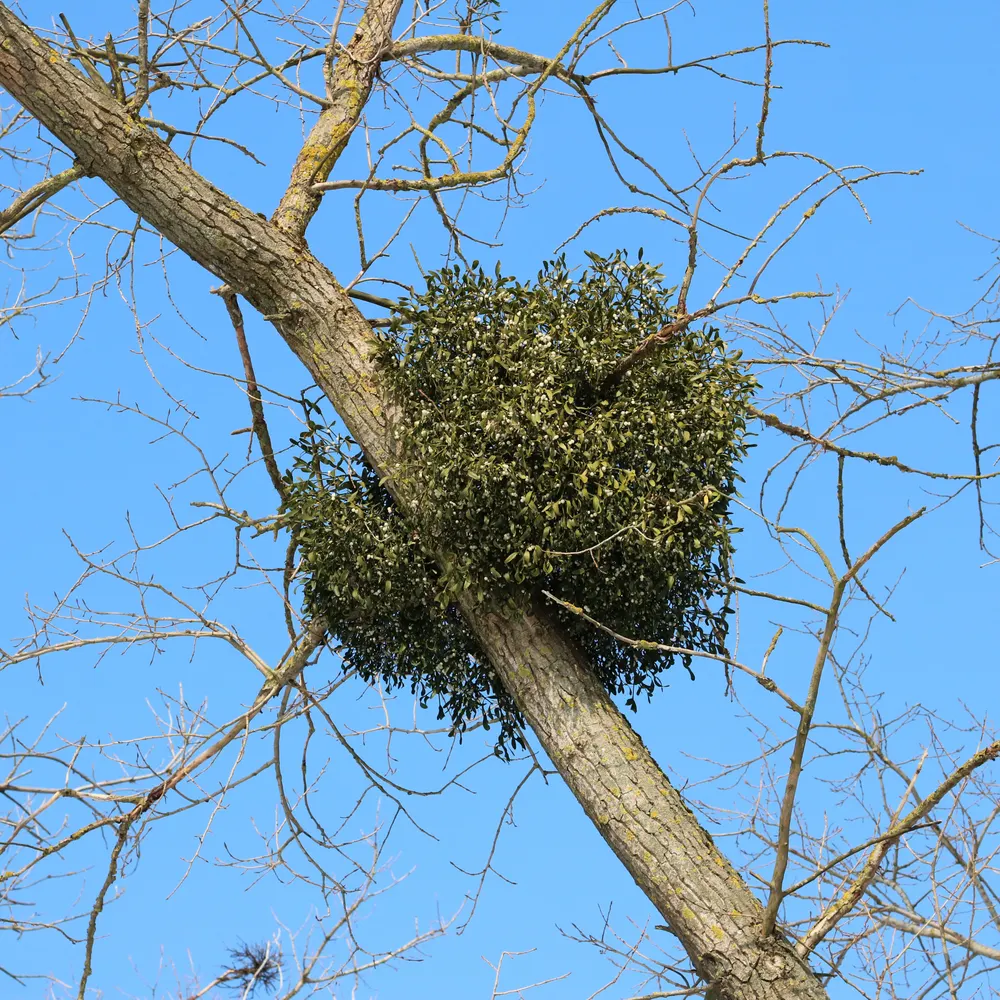
Photo: George Chernilevsky, CC BY 4.0 (via Wikimedia Commons)
European Mistletoe
Viscum album
Also known as European Mistletoe, Common Mistletoe, All-Heal, Birdlime, Golden Bough
Key benefits
✦Traditional uses
✦Long before it hung over doorways at Christmas, mistletoe held a sacred place in the eyes of the Druids, who were said to cut it from oak trees with a golden sickle, careful never to let it touch the ground. In Norse mythology it was the one plant humble enough to be overlooked when every other living thing swore never to harm the god Baldr, and it became the tool of his undoing, which is why later custom turned it into a symbol of peace and reconciliation instead. Medieval and early modern European herbalists took a more medicinal view, drying the leafy twigs and turning to them for falling sickness, for a racing pulse, and for troubles of the blood. That thread continues today in a very different form, as European anthroposophic medicine uses purified, injectable mistletoe extracts as a supportive treatment alongside conventional cancer care, a practice worlds apart from any home preparation.
How to grow & use it
✦The full apothecary for European Mistletoe
Traditional remedies and step-by-step preparations, a complete growing guide, and how to harvest, dry, and store it, all unlocked with HerbLens Unlimited.
- ✦Remedies & preparations
- ✦ Growing guide
- ✦Harvest & storage
From under $6 a month. Free plant identifications always included.
- ✦Hawthorn
- ✦Linden (lime flower)
- ✦Valerian
- ✦Hawthorn
- ✦Linden (lime flower)
“The green that never touches the ground, kissed by winter light and legend.”
The name mistletoe likely comes from the Anglo-Saxon words mistel, meaning dung, and tan, meaning twig, essentially dung-on-a-twig. It sounds unflattering, but it is botanically astute: early observers noticed mistletoe sprouting wherever birds had perched and left droppings behind, which is precisely how the sticky-seeded berries spread from tree to tree.
European mistletoe is toxic and should never be eaten or brewed at home. The white berries are the most dangerous part, but the leaves and stems carry the same toxic compounds, including viscotoxins and lectins, and can cause nausea, vomiting, diarrhea, dizziness, a dangerously slowed heart rate, and low blood pressure. Children and pets are especially at risk from holiday sprigs left within reach, and even small amounts of berries have sent curious kids to the emergency room. In parts of Europe, purified and standardized mistletoe extracts are prepared industrially and given only by injection under a physician's care, most often as a supportive therapy alongside conventional cancer treatment. That is a world away from steeping a home tea, and it is not something to replicate yourself. Avoid all use during pregnancy and breastfeeding, and be cautious of interactions with blood pressure medication and immune-suppressing drugs. Please talk to a qualified healthcare professional before considering mistletoe in any form, and never forage or prepare it for ingestion on your own.