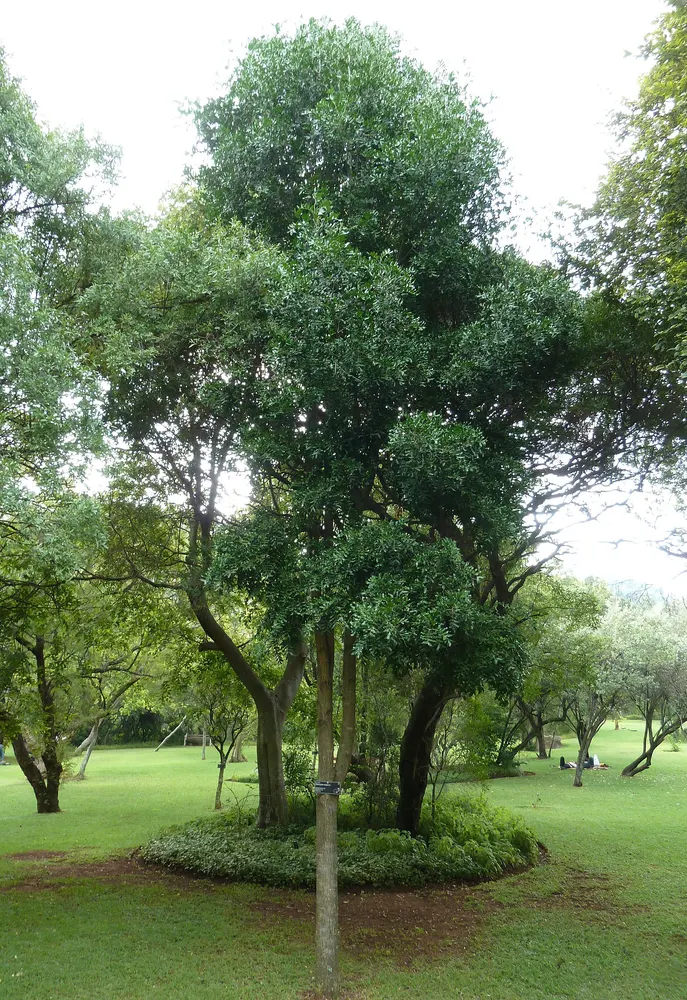
Photo: JMK, CC BY-SA 3.0 (via Wikimedia Commons)
Sneezewood
Ptaeroxylon obliquum
Also known as Nieshout, umThathi
Key benefits
✦Traditional uses
✦Long before it was studied in a laboratory, sneezewood was valued across southern Africa less as a medicine chest herb and more as a tree of iron, its dense, termite resistant timber built fence posts, wagon parts, and even xylophone keys in Mozambique that could outlast a generation. Still, it earned a real place in folk medicine, Xhosa healers took snuff from its powdered bark to ease headaches, Zulu communities used soaked leaves and roots for chest complaints and other ailments, and its leaves were wrapped over wounds after circumcision to ease pain and swelling. The tree's most famous trait gave it its name, working the wood releases sharp, aromatic oils that send carpenters into fits of sneezing, a quirk people noticed and eventually put to deliberate use.
How to grow & use it
✦The full apothecary for Sneezewood
Traditional remedies and step-by-step preparations, a complete growing guide, and how to harvest, dry, and store it, all unlocked with HerbLens Unlimited.
- ✦Remedies & preparations
- ✦ Growing guide
- ✦Harvest & storage
From under $6 a month. Free plant identifications always included.
“For the fence post meant to outlast the fence builder, and the story of a tree so pungent it named itself.”
Sneezewood's aromatic wood oils are so irritating that sawing or sanding the timber can send an entire workshop into a sneezing fit, a property Xhosa healers turned into medicine on purpose, taking snuff from the powdered bark specifically to relieve headaches.
Sawdust and bark contain sharp aromatic oils that strongly irritate the nose and airways, often provoking sneezing fits, and animal studies have found liver changes and cell toxicity at higher doses. It is a protected species in South Africa with restricted harvesting, and should not be eaten, brewed, or used medicinally without expert guidance.