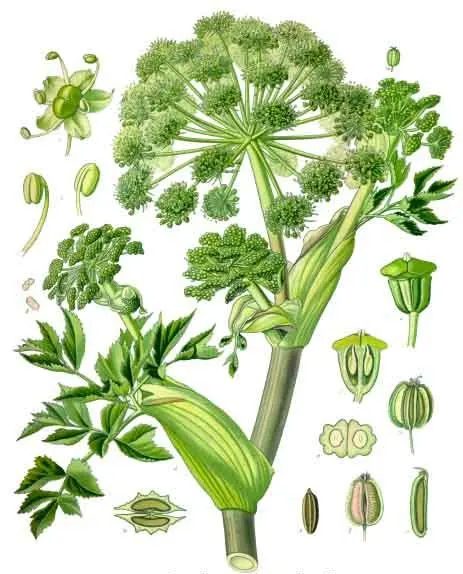
Photo: Franz Eugen Köhler, Köhler's Medizinal-Pflanzen, Public domain (via Wikimedia Commons)
Garden Angelica
Angelica archangelica
Also known as Garden Angelica, Holy Ghost Root, Wild Celery, Archangel, Angelica of the Alps
Key benefits
✦Traditional uses
✦Garden angelica has been treasured across Scandinavia and northern Europe for centuries, its thick aromatic root chewed by travelers to fend off cold and fatigue, and simmered into cordials and tonics meant to warm the belly and steady the chest. Monastery gardens kept it close at hand as one of the great tonic roots, and Sami communities used it both as food and medicine long before it entered formal herbals. Its stems were candied into a fragrant green sweet that is still used to decorate cakes today, a quiet echo of how deeply this plant was woven into daily life. Distillers, too, have long prized its root and seed as one of the defining botanicals in gin.
How to grow & use it
✦The full apothecary for Garden Angelica
Traditional remedies and step-by-step preparations, a complete growing guide, and how to harvest, dry, and store it, all unlocked with HerbLens Unlimited.
- ✦Remedies & preparations
- ✦ Growing guide
- ✦Harvest & storage
From under $6 a month. Free plant identifications always included.
- ✦Fennel
- ✦Chamomile
- ✦Lemon Balm
- ✦Lovage root
- ✦Fennel seed
“When the cold has settled into the bones and the belly feels heavy, reach for angelica's warming root.”
According to old legend, an archangel, Michael in some tellings and Raphael in others, appeared in a monk's dream during a plague and revealed this plant as a cure, which is how it earned both its common name and its Latin one, archangelica.
The fresh sap contains furanocoumarins that can cause a burn or rash after sun exposure, so handle it with care outdoors. It belongs to the carrot family, which includes deadly lookalikes like poison hemlock, so foraged plants must be identified by an expert; avoid medicinal use during pregnancy and alongside blood-thinning medication.