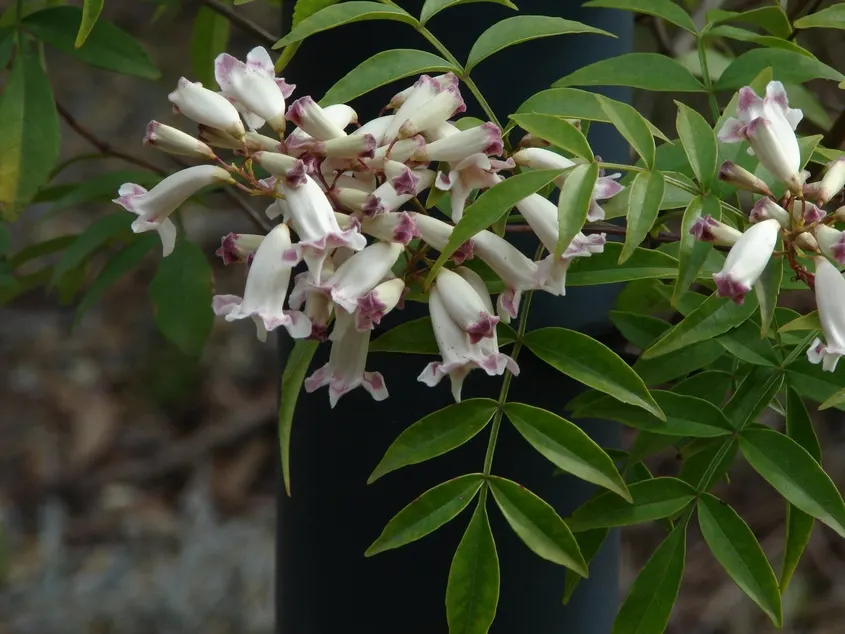
Photo: Tatiana Gerus from Brisbane, Australia, CC BY 2.0 (via Wikimedia Commons)
Wonga Wonga Vine
Pandorea pandorana
Also known as Wonga Vine, Wongawonga Vine
Key benefits
✦Traditional uses
✦Long before it found its way into ornamental gardens, Wonga Wonga Vine was a working plant for the Aboriginal peoples of eastern Australia, who prized its long, pliable stems for cordage. Twisted and dried, the vine's tough fibers were worked into fishing lines, string, and the woven dilly bags used to carry food and belongings. It was a plant valued for what it could do with the hands rather than what it could do for the body, a quiet reminder that not every useful herb ends up in a teacup. Today it is grown mostly for the beauty of its scrambling habit and its perfumed, speckled-throated flowers.
How to grow & use it
✦The full apothecary for Wonga Wonga Vine
Traditional remedies and step-by-step preparations, a complete growing guide, and how to harvest, dry, and store it, all unlocked with HerbLens Unlimited.
- ✦Remedies & preparations
- ✦ Growing guide
- ✦Harvest & storage
From under $6 a month. Free plant identifications always included.
“For the gardener who wants a fence or arbor wrapped in green year round, with a spring perfume that stops you mid-step.”
The name Wonga Wonga comes from the language of the Aboriginal peoples of the Sydney basin, and the vine's wiry, fibrous stems were once twisted into cord strong enough to bind fishing lines and weave dilly bags, a craft that shaped its everyday value long before anyone planted it for its flowers.
Not eaten; like other Bignoniaceae, its sap and seed pods can irritate skin or the stomach, so handle cuttings with care and keep them away from children and pets.