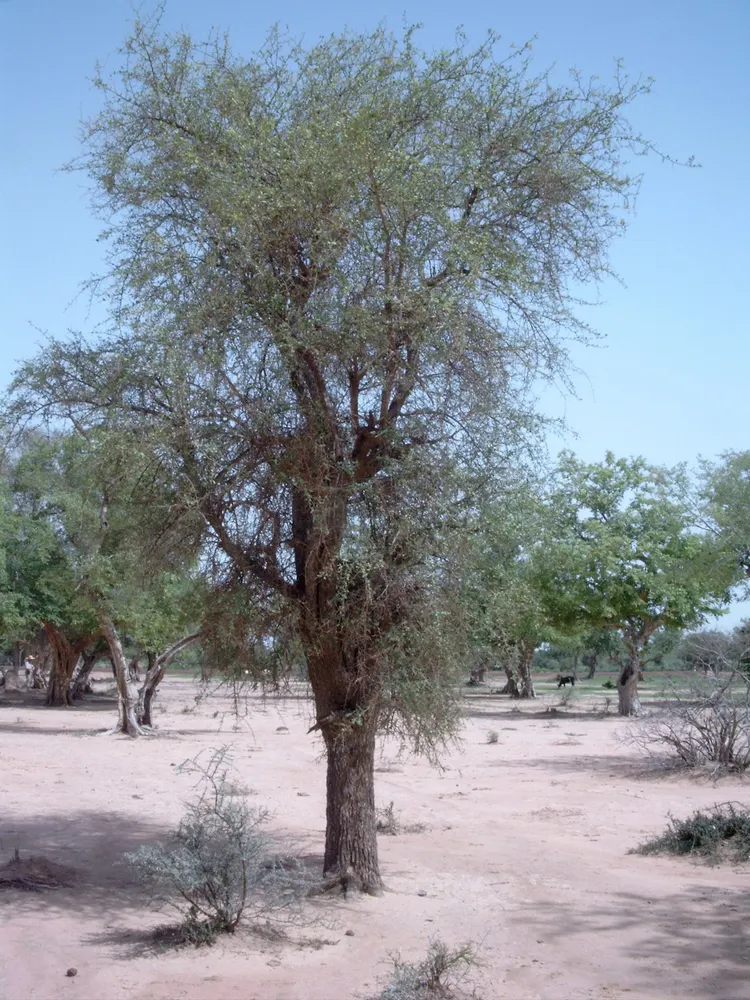
Photo: Marco Schmidt, CC BY-SA 2.5 (via Wikimedia Commons)
Desert Date
Balanites aegyptiaca
Also known as Desert Date, Soapberry Tree, Egyptian Balsam, Heglig, Zachun Oil Tree
Key benefits
✦Traditional uses
✦Across the Sahel and Nile Valley, the desert date has long been treasured as a tree of survival, its sweet pulp eaten fresh or dried as food when little else grows, and its oil-rich seed pressed for cooking and for softening skin through the dry season. Traditional healers across Africa have also turned to its bark, leaves, and roots for a wide range of remedies, from digestive complaints to skin troubles, though these preparations were handled with care given the tree's naturally bitter, soap-like compounds. Its wood, thorns, and even its saponin-rich parts found everyday uses too, from tool handles to traditional soap and fish-stunning preparations, earning it a reputation in many communities as a tree that wastes nothing.
How to grow & use it
✦The full apothecary for Desert Date
Traditional remedies and step-by-step preparations, a complete growing guide, and how to harvest, dry, and store it, all unlocked with HerbLens Unlimited.
- ✦Remedies & preparations
- ✦ Growing guide
- ✦Harvest & storage
From under $6 a month. Free plant identifications always included.
- ✦Tamarind
- ✦Baobab fruit pulp
- ✦Hibiscus
- ✦Tamarind pulp
- ✦Baobab fruit pulp
“For the long dry season, when the wells run low and a thorny old tree still hangs heavy with sweet, date-like fruit.”
Archaeologists have found the fruits and seeds of Balanites aegyptiaca among the funerary offerings in the tomb of Tutankhamun, meaning this humble desert tree was already being gathered and honored along the Nile more than three thousand years ago.
The bark, roots, and seed kernels of desert date contain steroidal saponins that are genuinely toxic and have traditionally been used as a fish poison, so they should never be self-prepared. The ripe fruit pulp is a traditional food and generally well tolerated, but the plant should be avoided in pregnancy and breastfeeding otherwise.