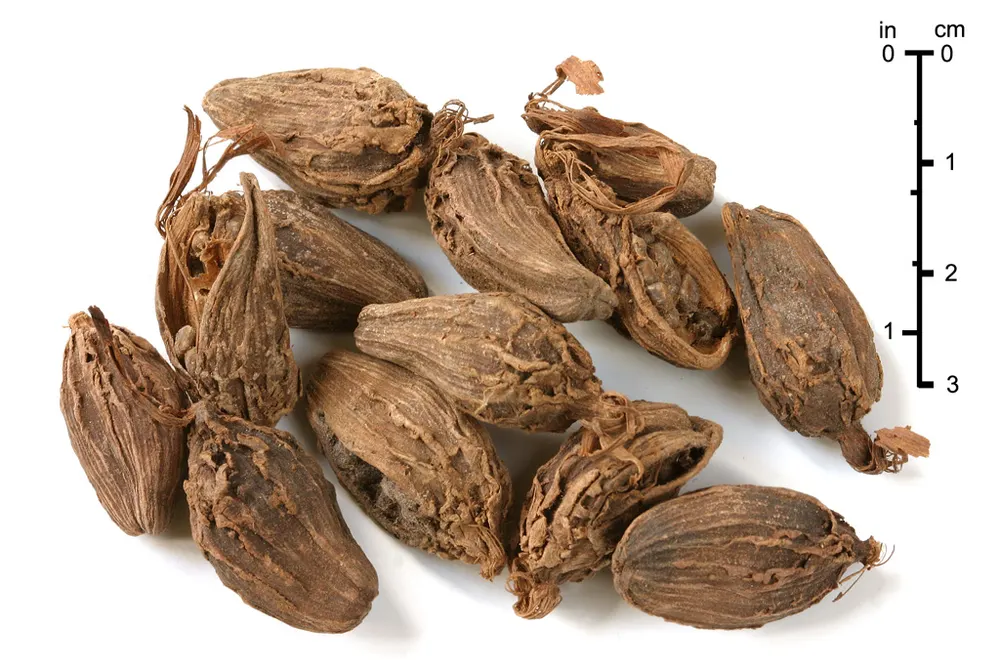
Photo: Brian Arthur, CC BY-SA 3.0 (via Wikimedia Commons)
Black Cardamom
Amomum subulatum
Also known as Nepal Cardamom, Greater Cardamom, Brown Cardamom, Bengal Cardamom, Hill Cardamom
Key benefits
✦Traditional uses
✦Long before it became a pantry staple, black cardamom was treasured across the Himalayan foothills and throughout Ayurvedic and Traditional Chinese Medicine traditions, where it was used to help settle the stomach, ease coughs and colds, and freshen the breath after meals. Traders carried these smoky pods along old mountain routes into the kitchens of Nepal, India, and beyond, where they became essential to garam masala, biryani, and slow-simmered meat dishes. Its warming, resinous character earned it a place not just as a spice but as a small household remedy, tucked into tea after a rich meal or chewed whole to close out a dinner.
How to grow & use it
✦The full apothecary for Black Cardamom
Traditional remedies and step-by-step preparations, a complete growing guide, and how to harvest, dry, and store it, all unlocked with HerbLens Unlimited.
- ✦Remedies & preparations
- ✦ Growing guide
- ✦Harvest & storage
From under $6 a month. Free plant identifications always included.
- ✦Cinnamon
- ✦Cloves
- ✦Bay leaf
- ✦Green cardamom (milder, no smokiness, use in a pinch)
- ✦A pinch of smoked paprika (for smoky notes only, not a true flavor match)
“When a dish, or a tired stomach, calls for something deep, smoky, and warmly resinous.”
Unlike its delicate cousin green cardamom, black cardamom pods are traditionally cured over open wood fires in bamboo racks, which is where that unmistakable campfire smokiness comes from. No other major spice is dried quite this way.
Black cardamom is safe in normal culinary amounts, though large quantities may cause mild stomach upset, and those allergic to ginger or turmeric should be cautious.