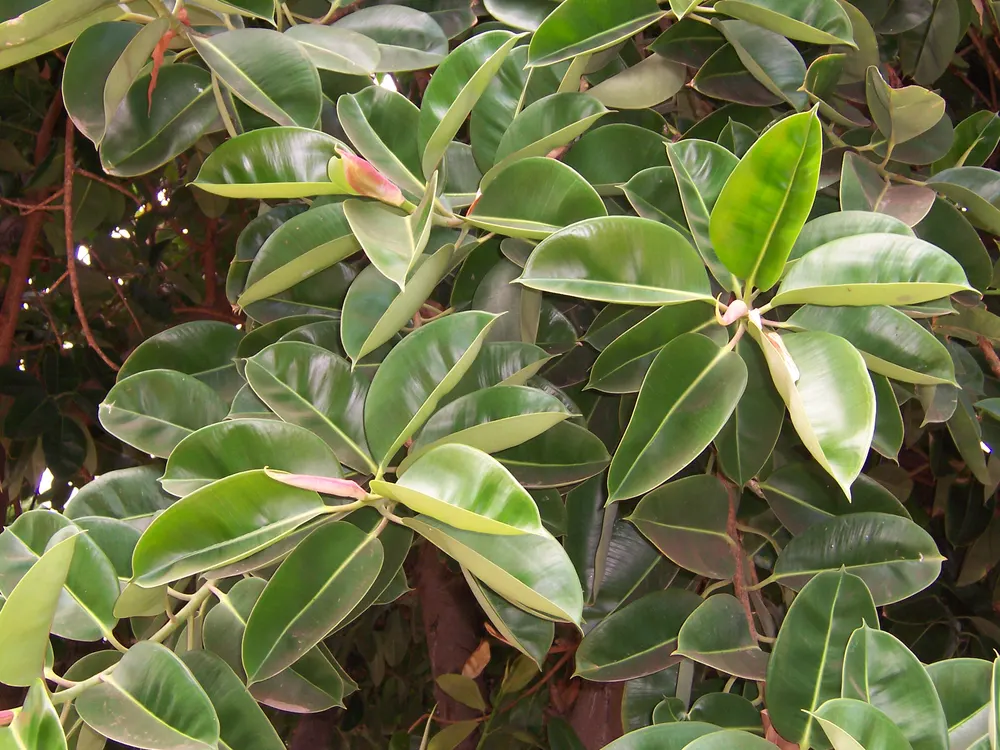
Photo: B.navez, CC BY-SA 3.0 (via Wikimedia Commons)
Rubber Plant
Ficus elastica
Also known as Rubber Tree, Rubber Fig, Indian Rubber Tree, Assam Rubber
Key benefits
✦Traditional uses
✦Long before synthetic rubber existed, the milky latex of Ficus elastica was tapped across South and Southeast Asia and processed into one of the earliest commercially traded sources of natural rubber, which is how the tree earned its common name. In the Khasi and Jaintia Hills of northeastern India, generations of villagers have trained the tree's tough aerial roots across rivers and ravines, weaving and guiding them for decades until they mature into living root bridges strong enough to carry foot traffic. By the Victorian era, the plant had become a beloved parlor tree in Europe and America, valued simply for its glossy leaves and its patient tolerance of dim, dusty drawing rooms.
How to grow & use it
✦The full apothecary for Rubber Plant
Traditional remedies and step-by-step preparations, a complete growing guide, and how to harvest, dry, and store it, all unlocked with HerbLens Unlimited.
- ✦Remedies & preparations
- ✦ Growing guide
- ✦Harvest & storage
From under $6 a month. Free plant identifications always included.
- ✦Snake Plant
- ✦Pothos
- ✦Monstera deliciosa
- ✦Fiddle Leaf Fig
- ✦Weeping Fig
“For a bold, glossy-leafed presence that asks for almost nothing and forgives almost everything.”
In the Khasi Hills of Meghalaya, India, communities have spent decades guiding the aerial roots of Ficus elastica across streams to grow living bridges, some more than a century old and still strong enough to cross on foot today.
The milky sap irritates skin and eyes on contact and can cause vomiting or drooling if chewed, and it's toxic to cats and dogs, so keep cut stems away from pets and children.