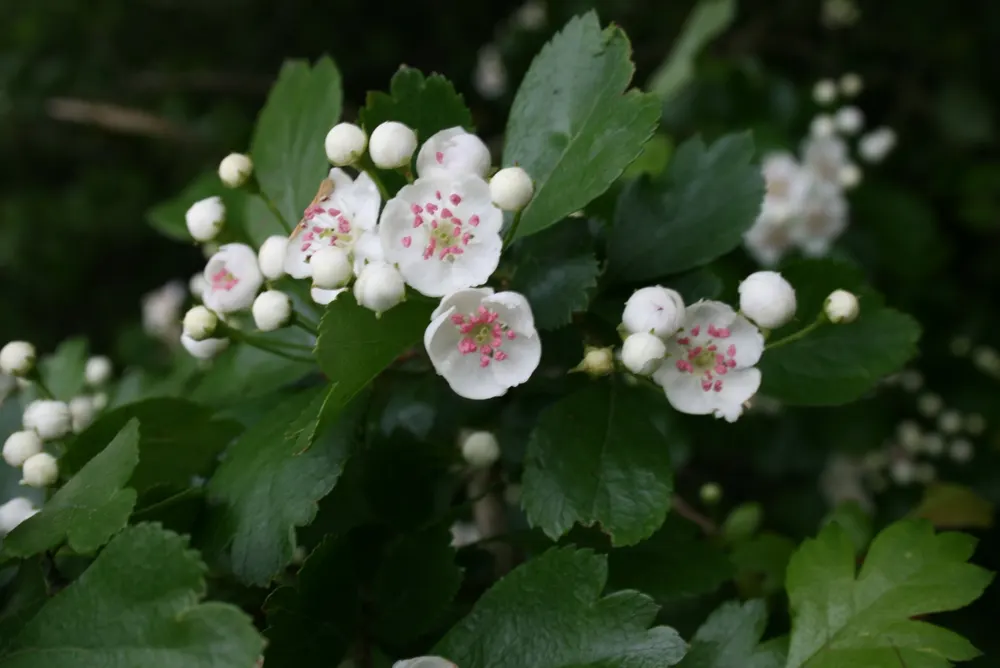
Photo: Sten Porse, CC BY-SA 3.0 (via Wikimedia Commons)
Hawthorn
Crataegus laevigata
Also known as English Hawthorn, Mayflower, Woodland Hawthorn, Midland Hawthorn, Maythorn
Key benefits
✦Traditional uses
✦For centuries, hawthorn has stood at the crossroads of medicine and folklore, its thorny hedges marking both farmland boundaries and the edge of the fairy world in old European belief. Herbalists from the nineteenth century onward turned to its flowers, leaves, and small red berries, called haws, as a gentle tonic for the heart and circulation, a tradition that grew so strong it earned hawthorn the nickname the heart herb. Village folk also steeped the blossoms and berries for occasional nervous tension, treating hawthorn as a plant that soothed both the physical heart and the emotional one. Its early bloom each May made it a herald of spring, gathered into garlands long before it found a home in the herbalist's cabinet.
How to grow & use it
✦The full apothecary for Hawthorn
Traditional remedies and step-by-step preparations, a complete growing guide, and how to harvest, dry, and store it, all unlocked with HerbLens Unlimited.
- ✦Remedies & preparations
- ✦ Growing guide
- ✦Harvest & storage
From under $6 a month. Free plant identifications always included.
- ✦Motherwort
- ✦Lemon balm
- ✦Linden flower
- ✦Rose hips
- ✦Linden flower
“For the tender, thorn-guarded heart of the hedgerow, steeped slow and taken to heart.”
In medieval England, it was considered deeply unlucky to bring hawthorn blossoms indoors, since their scent was said to carry the smell of the plague, a warning modern chemists later traced to trimethylamine, a compound the flowers share with decaying tissue.
Can strengthen the effect of heart medications such as digoxin, beta blockers, and blood pressure drugs, so don't combine without medical guidance. Avoid during pregnancy and breastfeeding, and don't use it in place of prescribed care for a diagnosed heart condition.