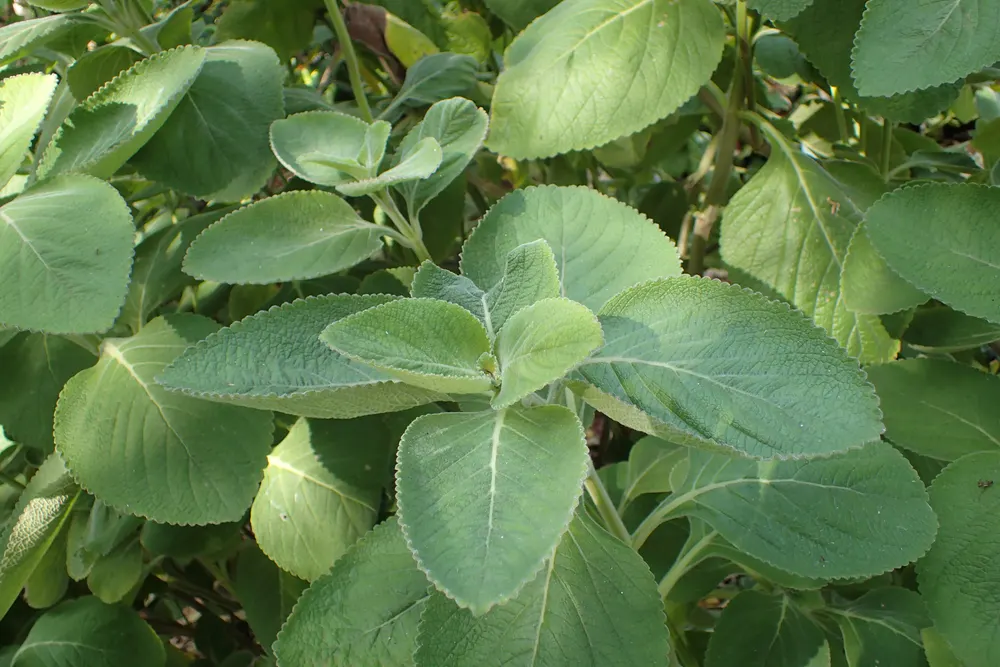
Photo: Krzysztof Ziarnek, Kenraiz, CC BY-SA 4.0 (via Wikimedia Commons)
Coleus (Indian Coleus / Forskohlii)
Plectranthus barbatus
Also known as Indian coleus, Forskohlii, Coleus forskohlii (older scientific name), Coleus barbatus
Key benefits
✦Traditional uses
✦In Ayurvedic medicine, the tuberous root of coleus has been dug, dried, and prepared as a remedy for centuries across India, where it was valued for supporting the heart and lungs and for easing sluggish digestion. Village herbalists traditionally simmered the root into a decoction for people struggling to breathe or feeling weak in the chest, long before Western scientists isolated the compound forskolin from its tissue. In some regions the fresh root was also pickled and eaten as a pungent, warming food, blurring the line between kitchen and medicine chest the way so many old herbs do. It remains one of the more thoroughly studied roots to come out of the traditional Ayurvedic pharmacy.
How to grow & use it
✦The full apothecary for Coleus (Indian Coleus / Forskohlii)
Traditional remedies and step-by-step preparations, a complete growing guide, and how to harvest, dry, and store it, all unlocked with HerbLens Unlimited.
- ✦Remedies & preparations
- ✦ Growing guide
- ✦Harvest & storage
From under $6 a month. Free plant identifications always included.
- ✦Ginger
- ✦Hawthorn
- ✦Licorice root
- ✦Hawthorn (for traditional heart support)
- ✦Ginger (for traditional digestive support)
“For the old root remedy that Ayurvedic healers reached for when the heart needed steadying and the breath needed easing.”
Forskolin, the compound coleus root is best known for today, became a laboratory staple because scientists use it to reliably raise cyclic AMP in cells, a trick that started with researchers investigating this humble Ayurvedic root in the 1970s.
Forskolin in coleus root can lower blood pressure and affect blood clotting, so avoid it with blood pressure medication, blood thinners, or antiplatelet drugs, and stop before surgery. It is not recommended during pregnancy or breastfeeding, and caution is warranted with a heart condition, low blood pressure, or peptic ulcer.