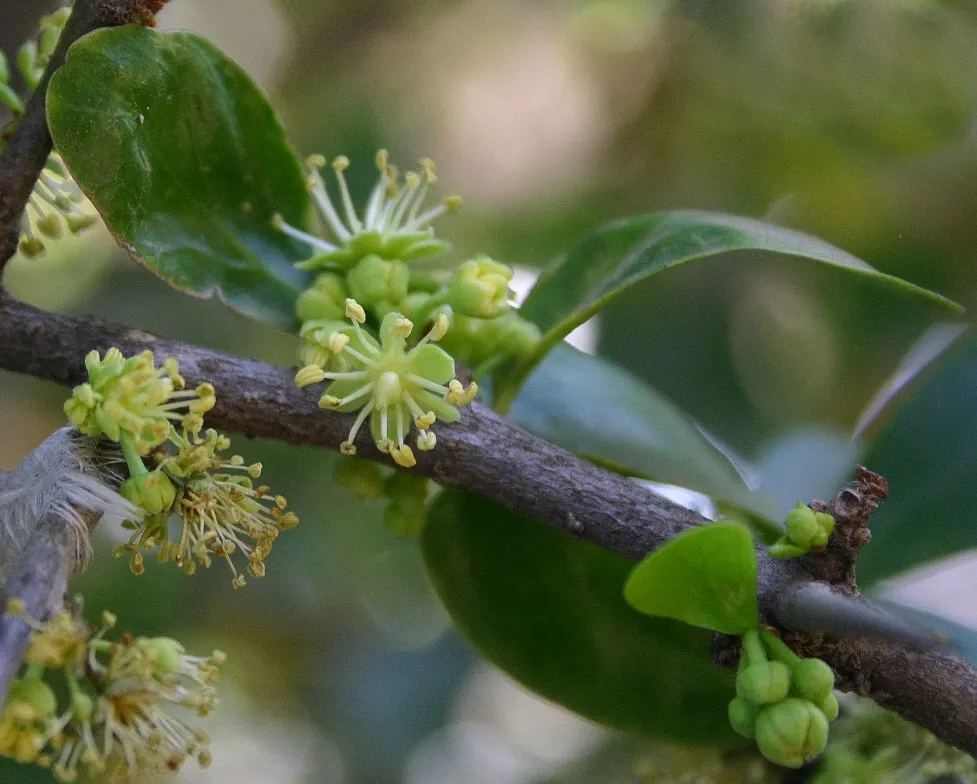
Photo: Raasgat, Public domain (via Wikimedia Commons)
Kei Apple
Dovyalis caffra
Also known as Umqokolo, Kau Apple, Kei Apfel, Wild Apricot (regional)
Key benefits
✦Traditional uses
✦The Kei apple takes its name from the Kei River in South Africa's Eastern Cape, where it has grown wild for generations along the region's dry hillsides. For the Xhosa and other communities of the area, its dense, thorn-studded branches made it a natural choice for living fences, planted tight around homesteads and cattle kraals to keep livestock in and intruders out, long before wire fencing arrived. The golden fruit, too sour to enjoy straight off the branch in most cases, was prized as a seasonal source of vitamin C and was traditionally cooked down with sugar into jams, jellies, and syrups to carry that tartness through the year. Early European settlers and traders adopted the same hedging practice, spreading Kei apple far beyond its native range as a hardy, thorny boundary plant.
How to grow & use it
✦The full apothecary for Kei Apple
Traditional remedies and step-by-step preparations, a complete growing guide, and how to harvest, dry, and store it, all unlocked with HerbLens Unlimited.
- ✦Remedies & preparations
- ✦ Growing guide
- ✦Harvest & storage
From under $6 a month. Free plant identifications always included.
- ✦Ginger
- ✦Rooibos
- ✦Lemon verbena
- ✦Crab apple
- ✦Gooseberry
“For a tart, sunlit taste of the African veld, ready to be coaxed into jam.”
The Kei apple's thorns are so effective that hedges of it were once planted around prisons, military posts, and diamond diggings in southern Africa as a genuinely difficult barrier to force through, doing the work of barbed wire long before barbed wire existed.
Ripe Kei apple is a safe food, usually cooked with sugar since it's very sour and astringent raw. The thorns are long and sharp, so wear gloves when handling the plant.