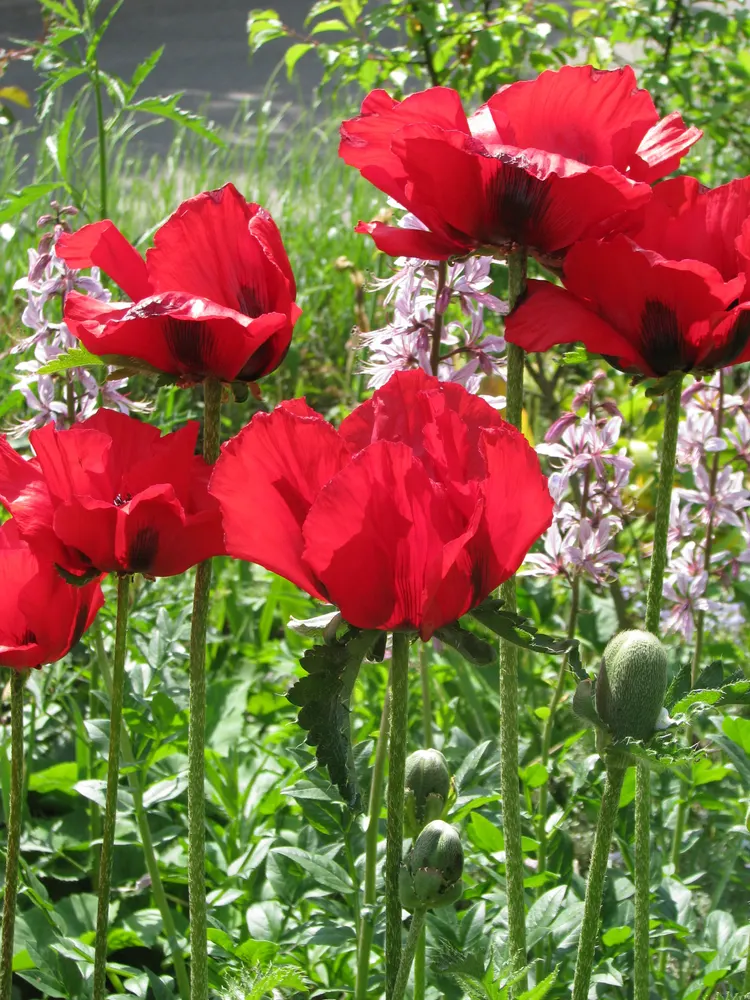
Photo: peganum from Small Dole, England, CC BY-SA 2.0 (via Wikimedia Commons)
Iranian Poppy
Papaver bracteatum
Also known as Persian poppy, Great scarlet poppy, Bract poppy
Key benefits
✦Traditional uses
✦Papaver bracteatum has long grown wild across the highlands of Iran and the Caucasus, where its enormous scarlet blooms, each petal marked with a dark blotch at the base, made it a striking presence on mountain slopes rather than a plant of the herb garden. In the twentieth century it drew serious scientific attention because its latex is unusually rich in thebaine rather than morphine, and agricultural programs in Iran, Turkey, and elsewhere bred and cultivated it as a licensed pharmaceutical crop, an alternative source of opiate precursors that reduced reliance on illicit opium poppy fields. Outside of that regulated industry, its role has always been visual rather than medicinal, prized in gardens and dried arrangements for its bold, silky flowers and sculptural seed heads.
How to grow & use it
✦The full apothecary for Iranian Poppy
Traditional remedies and step-by-step preparations, a complete growing guide, and how to harvest, dry, and store it, all unlocked with HerbLens Unlimited.
- ✦Remedies & preparations
- ✦ Growing guide
- ✦Harvest & storage
From under $6 a month. Free plant identifications always included.
- ✦Bearded iris
- ✦Catmint
- ✦Ornamental alliums
- ✦Papaver orientale (Oriental poppy) for a similarly bold, non-restricted garden poppy
“For a mountain-bred bloom of pure, dramatic color, grown for the eye alone.”
This poppy's unusually high thebaine content, rather than morphine, is exactly what made it valuable to pharmaceutical breeding programs starting in the 1970s, since thebaine can be converted into medicines like codeine and oxycodone without the same risk of diversion as raw opium.
Papaver bracteatum is a close relative of the opium poppy and, like it, produces latex rich in opium alkaloids, most notably thebaine, along with lesser amounts of other narcotic compounds. All parts of the fresh plant, especially the milky sap and unripe seed pods, are toxic if eaten and are not safe for home teas, tinctures, or any other preparation. Because of its thebaine content, this species is grown commercially under strict government license in a handful of countries as a pharmaceutical source crop, and in many places private cultivation of high-alkaloid poppies is restricted or illegal without a permit. There are no traditional home remedies made from this plant, and none should be attempted. If you are drawn to this poppy, enjoy it strictly as an ornamental, check your local and national regulations before growing it, and speak with a qualified professional or your local agricultural authority with any questions about its legal status.