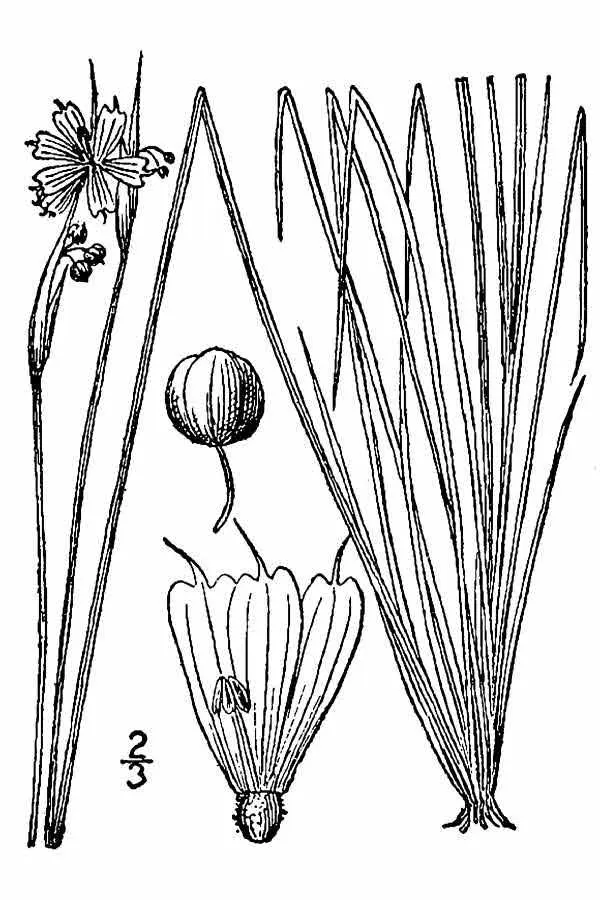
Photo: Nathaniel Lord Britton (1859-1934) and Addison Brown (1830-1913), Public domain (via Wikimedia Commons)
Needletip Blue-eyed Grass
Sisyrinchium mucronatum
Also known as Blue-eyed grass
Key benefits
✦Traditional uses
✦Needletip blue-eyed grass belongs to a large, cheerful genus that dots North American prairies and open woods with tiny iris-shaped stars every spring, and though pioneers gave it the folk name grass for its slender leaves, botanists have always placed it firmly among the irises. Unlike some of its more storied cousins, this particular species carries no well-documented tradition of use as a medicine or a foodstuff. A few other Sisyrinchium species picked up modest folk reputations among some Native American communities as mild home remedies for stomach troubles, but that thread of use was never clearly tied to S. mucronatum itself, so it is best appreciated here simply as the lovely, sun-loving little wildflower it has always been.
How to grow & use it
✦The full apothecary for Needletip Blue-eyed Grass
Traditional remedies and step-by-step preparations, a complete growing guide, and how to harvest, dry, and store it, all unlocked with HerbLens Unlimited.
- ✦Remedies & preparations
- ✦ Growing guide
- ✦Harvest & storage
From under $6 a month. Free plant identifications always included.
- ✦Little bluestem
- ✦Purple coneflower
- ✦Wild columbine
- ✦Sisyrinchium angustifolium (common blue-eyed grass)
- ✦Sisyrinchium bellum (western blue-eyed grass)
“For the gardener who wants a native meadow's flicker of periwinkle blue at their feet on a bright late-spring morning.”
Despite the common name, needletip blue-eyed grass is not a grass at all. It is a true member of the iris family, and its cheerful little flowers only fully open in direct sun, closing up tight on cloudy afternoons and by evening.
Needletip blue-eyed grass is not a food or medicinal herb, and grazing large amounts has caused mild digestive upset in livestock. Confirm identification before handling, since it can resemble other small blue-flowered plants.