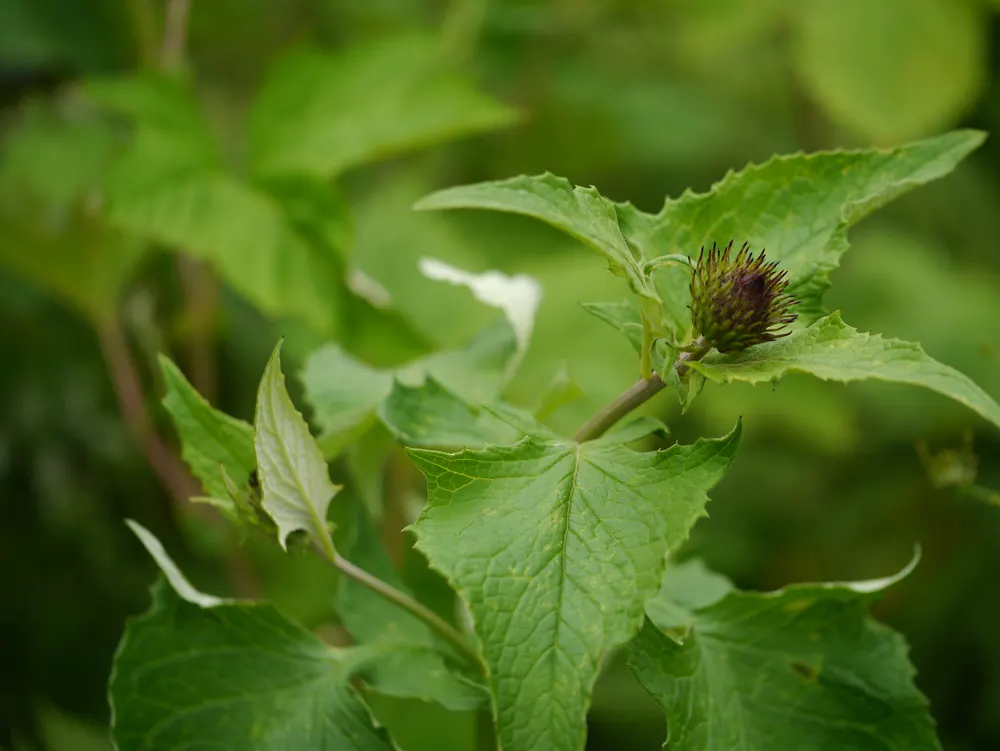
Photo: Dinesh Valke from Thane, India, CC BY-SA 2.0 (via Wikimedia Commons)
Costus Root
Aucklandia lappa
Also known as Mu Xiang, Kuth, Kushtha, Putchuk, Saussurea Root
Key benefits
✦Traditional uses
✦Long before it traveled the trade routes west, this root grew wild on the high, windswept meadows of Kashmir, where it was dug, sliced, and dried into one of the most treasured roots in the Himalayan pharmacy. In Traditional Chinese Medicine it became known as mu xiang, the fragrant wood, a warming root used to move qi that had grown sluggish in the belly and to ease the bloating, cramping, and heaviness that followed. Ayurvedic healers called it kushtha and turned to it for labored breathing and stubborn coughs. Its resinous, honeyed scent also made it a favorite of perfumers and incense makers, who prized it as much for the nose as for the body.
How to grow & use it
✦The full apothecary for Costus Root
Traditional remedies and step-by-step preparations, a complete growing guide, and how to harvest, dry, and store it, all unlocked with HerbLens Unlimited.
- ✦Remedies & preparations
- ✦ Growing guide
- ✦Harvest & storage
From under $6 a month. Free plant identifications always included.
- ✦Ginger root
- ✦Citrus peel (chen pi)
- ✦Cardamom
- ✦Bitter orange peel
- ✦Ginger root
“For the heavy, stuck feeling after a meal that refuses to settle.”
Costus root's rich, woody fragrance made it a fixture of ancient perfumery and temple incense across Asia and the Middle East, but that same fragrant oil is now considered one of the most common causes of allergic skin reactions in old-style perfumes, which led modern fragrance houses to largely retire it.
The essential oil is a known skin sensitizer, especially for those allergic to ragweed, daisies, or other Asteraceae plants, and shouldn't be taken internally; avoid in pregnancy. Wild costus root is critically endangered and restricted under CITES, so use only cultivated, legally sourced material.