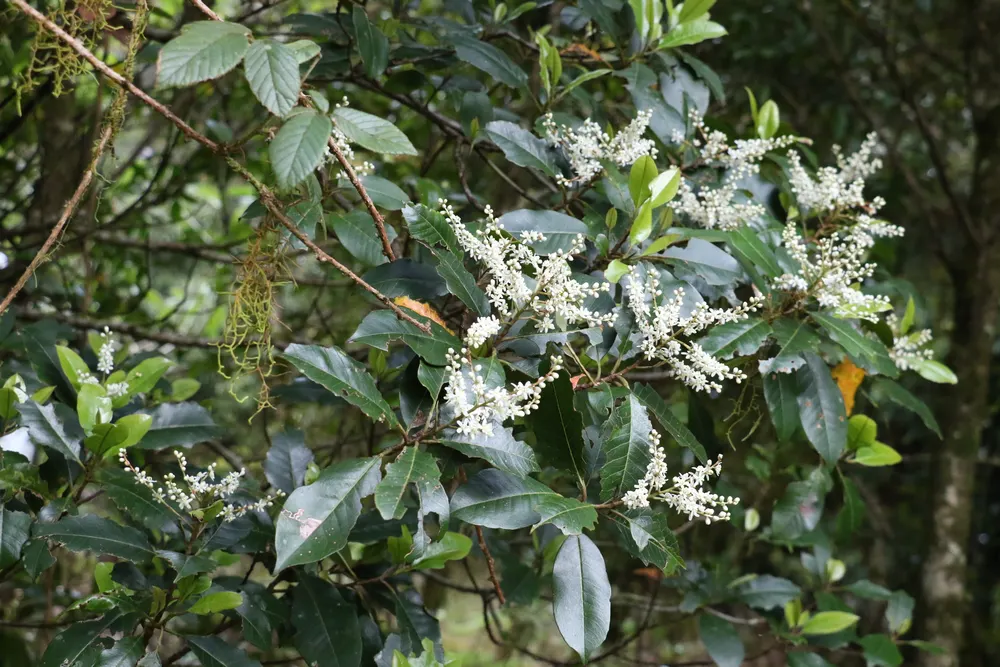
Photo: Greg Tasney, CC BY-SA 4.0 (via Wikimedia Commons)
Possumwood
Quintinia sieberi
Also known as Possumwood, Sieber's Quintinia
Key benefits
✦Traditional uses
✦Possumwood belongs to the quiet, unglamorous ranks of Australian rainforest trees that were never gathered for the medicine chest, only lived alongside. Its common name is a piece of bush folklore rather than pharmacy, said to come from the way brushtail and ringtail possums seek out its foliage and fruit through the forest canopy at night. Early settlers and bushmen in the NSW ranges would have known it simply as one of many mid-story rainforest trees filling out the gullies, valued more for holding the forest together than for any single use. Today it is grown chiefly by native plant enthusiasts who want to recreate a genuine patch of eastern rainforest and the wildlife that depends on it.
How to grow & use it
✦The full apothecary for Possumwood
Traditional remedies and step-by-step preparations, a complete growing guide, and how to harvest, dry, and store it, all unlocked with HerbLens Unlimited.
- ✦Remedies & preparations
- ✦ Growing guide
- ✦Harvest & storage
From under $6 a month. Free plant identifications always included.
- ✦Coachwood
- ✦Lilly Pilly
- ✦Sassafras
- ✦Other Quintinia species such as Quintinia verdonii
- ✦Coachwood for a similar rainforest canopy role
“For the shaded, leaf littered corner of a garden where a possum's dinner and a bird's shelter matter more than a harvest.”
The genus Quintinia was named to honor Jean-Baptiste de La Quintinie, the seventeenth century French gardener who designed the great kitchen garden at Versailles for Louis XIV, a quiet tribute carried all the way to the rainforests of eastern Australia.
Grown as an ornamental only; no part of this tree is eaten or used medicinally.