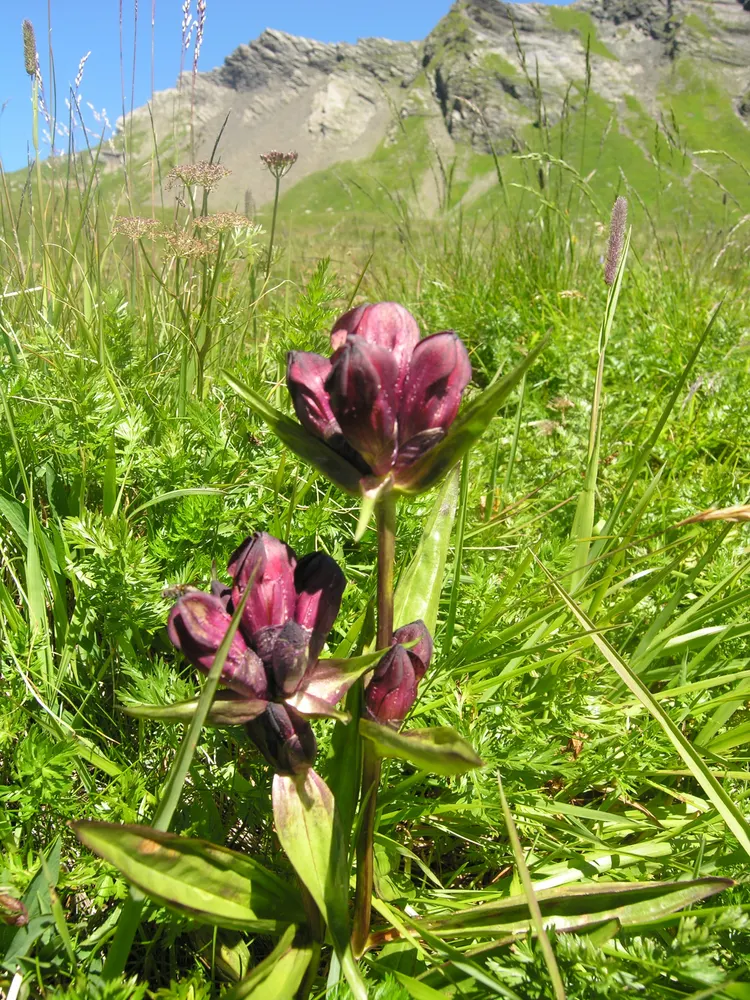
Photo: Audrius Meskauskas (Audriusa), CC BY-SA 3.0 (via Wikimedia Commons)
Purple Gentian
Gentiana purpurea
Also known as Purple Gentian, Broadleaf Gentian, Gentiane pourpre
Key benefits
✦Traditional uses
✦For generations, mountain farmers and monastery herbalists in the Alps and Jura dug the intensely bitter roots of purple gentian much as they did its better-known cousin, yellow gentian, using it to kindle a tired appetite and settle heavy digestion after rich meals of cheese, cured meat, and hearty bread. It became one of several gentians distilled into the mountain bitters and liqueurs of Switzerland and the French Alps, poured in small glasses before or after supper as both a digestive and a small ceremony of hospitality. Herders also carried it as a general tonic, believed to fortify strength and stave off the sluggishness of long, thin winters at altitude.
How to grow & use it
✦The full apothecary for Purple Gentian
Traditional remedies and step-by-step preparations, a complete growing guide, and how to harvest, dry, and store it, all unlocked with HerbLens Unlimited.
- ✦Remedies & preparations
- ✦ Growing guide
- ✦Harvest & storage
From under $6 a month. Free plant identifications always included.
- ✦Ginger
- ✦Orange peel
- ✦Fennel seed
- ✦Gentiana lutea (yellow gentian root)
- ✦Dandelion root
“When the table feels heavy and the appetite has wandered off somewhere down the mountain, a small cup of purple gentian calls it home.”
In the high Alps, purple gentian is one of several gentian species, alongside yellow, spotted, and Hungarian gentian, whose roots have traditionally been dug together and distilled into the mountain spirit known simply as "gentiane," once kept in nearly every alpine farmhouse as a remedy for a heavy stomach.
Purple gentian's bitterness stimulates stomach acid, so it's avoided by those with ulcers, gastritis, or acid reflux, and traditionally avoided during pregnancy. Anyone managing diabetes or blood pressure should also use it cautiously. Wild plants are protected in much of their alpine range, so use only garden-grown or reputably sourced root.