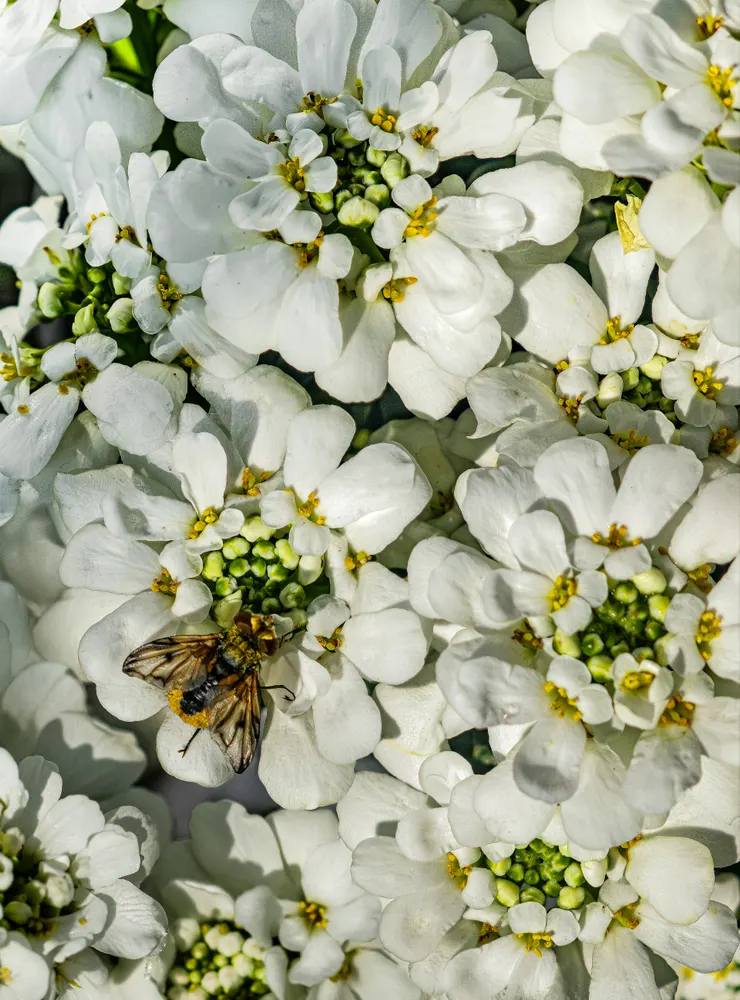
Photo: Didier Descouens, CC BY-SA 4.0 (via Wikimedia Commons)
Evergreen Candytuft
Iberis sempervirens
Also known as Perennial Candytuft, Snow Cushion, Iberis
Key benefits
✦Traditional uses
✦Evergreen Candytuft has no real place in the old kitchen or medicine cabinet, its story belongs to the garden rather than the still room. Cottage gardeners in Europe prized it for centuries as one of the first plants to break winter's grip, tumbling white over stone walls and rockeries while most everything else was still bare. Its common name is a small piece of linguistic history rather than a nod to sweets, herbalists and garden writers trace 'candytuft' back to Candia, the old name for the island of Crete, where several of its wild cousins grow along rocky hillsides. It has stayed a beloved passalong plant for exactly the reason gardeners still choose it today, dependable, tidy, and generous with bloom for very little fuss.
How to grow & use it
✦The full apothecary for Evergreen Candytuft
Traditional remedies and step-by-step preparations, a complete growing guide, and how to harvest, dry, and store it, all unlocked with HerbLens Unlimited.
- ✦Remedies & preparations
- ✦ Growing guide
- ✦Harvest & storage
From under $6 a month. Free plant identifications always included.
- ✦Creeping phlox
- ✦Aubrieta (rock cress)
- ✦Basket-of-gold (Aurinia saxatilis)
- ✦Arabis caucasica (wall rock cress)
- ✦Aurinia saxatilis (basket-of-gold)
“When a stone wall or sunny slope needs its first bright wave of white before the rest of the garden has even woken up.”
Despite the sweet-sounding name, candytuft has nothing to do with sugar candy, it comes from Candia, the historic name for Crete, where relatives of this plant have grown wild on rocky hillsides for centuries.
Evergreen Candytuft has no meaningful tradition as a food or medicinal herb, and it has not been established as safe to eat. As with many ornamental members of the mustard family, treat it as a garden plant only, not for ingestion, and keep it away from small children and pets who might nibble on foliage or flowers. If any part is swallowed and irritation or illness follows, contact a poison control center or a qualified healthcare professional rather than relying on home remedies.